
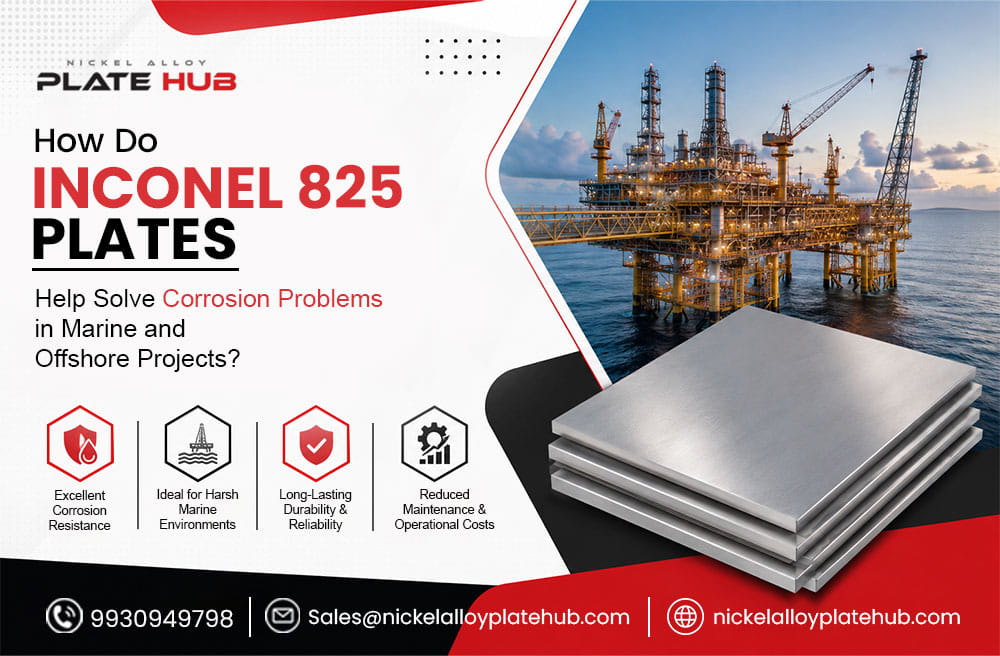
How Do Inconel 825 Plates Help Solve Corrosion Problems in Marine and Offshore Projects?

Marine and offshore industries operate in some of the world’s harshest environments. Constant exposure to saltwater, humidity, chlorides, acidic chemicals, and fluctuating temperatures can quickly degrade conventional metals, leading to equipment failure, increased maintenance costs, and operational downtime. To overcome these challenges, industries increasingly rely on high-performance nickel alloys that deliver exceptional corrosion resistance and mechanical strength.

Among these advanced materials, Inconel 825 plates have emerged as a preferred choice for offshore platforms, marine structures, desalination plants, and chemical processing systems.

Although many engineers also evaluate Inconel 625 plate applications for demanding environments, Inconel 825 offers an outstanding balance of corrosion resistance, fabrication ease, and cost-effectiveness, making it one of the most trusted offshore alloys available today.

In this guide, we at Nickel Alloy Plate Hub explore how Inconel 825 plates help solve corrosion problems and why they continue to be an essential material for marine engineering.

What Are Inconel 825 Plates?

Inconel 825 is a nickel-iron-chromium alloy enhanced with molybdenum, copper, and titanium. This carefully engineered composition provides exceptional resistance against both oxidizing and reducing acids while maintaining excellent strength in aggressive marine environments.

Unlike conventional stainless steel, Inconel 825 withstands prolonged exposure to chloride-rich seawater without suffering from localized corrosion or stress corrosion cracking.

Typical Chemical Composition

  • Nickel (38–46%)
  • Chromium (19.5–23.5%)
  • Iron (Balance)
  • Molybdenum
  • Copper
  • Titanium

These alloying elements work together to provide superior durability in corrosive industrial applications.

Why Do Marine Environments Cause Severe Corrosion?

Marine structures constantly encounter:

  • Saltwater immersion
  • Chloride attack
  • High humidity
  • Oxygen-rich seawater
  • Biological fouling
  • Sulfur compounds
  • Acidic cleaning chemicals

Traditional carbon steel develops rust rapidly, while many stainless steels become vulnerable to pitting corrosion after prolonged chloride exposure.

This is where premium offshore alloys like Inconel 825 outperform conventional engineering materials.

How Inconel 825 Plates Solve Marine Corrosion Problems

1. Exceptional Resistance to Chloride-Induced Corrosion

Seawater contains high concentrations of chloride ions that aggressively attack ordinary metals.

Inconel 825 provides outstanding protection against:

  • Chloride pitting
  • Crevice corrosion
  • Stress corrosion cracking
  • Surface degradation

This significantly extends the service life of offshore equipment.

2. Excellent Performance in Acidic Environments

Offshore oil and gas production often exposes materials to:

  • Sulfuric acid
  • Phosphoric acid
  • Nitric acid
  • Organic acids

The addition of copper and molybdenum enables Inconel 825 plates to resist both oxidizing and reducing acids, making them ideal for chemical handling systems.

3. High Resistance to Stress Corrosion Cracking

Stress corrosion cracking is one of the leading causes of failure in offshore components.

Inconel 825 offers excellent resistance even when exposed to:

  • High mechanical loads
  • Chloride-rich seawater
  • Elevated temperatures

This improves operational reliability and minimizes unexpected shutdowns.

4. Superior Mechanical Strength

Marine structures experience:

  • Heavy wave impact
  • Wind loading
  • Pressure fluctuations
  • Mechanical vibration

Inconel 825 retains its mechanical properties even under extreme operating conditions, ensuring structural integrity over long service periods.

5. Outstanding Weldability

Large offshore installations require extensive fabrication and welding.

Inconel 825 plates offer:

  • Easy fabrication
  • Excellent weldability
  • Reduced post-weld cracking
  • Consistent corrosion resistance across welded joints

This lowers fabrication costs while maintaining long-term performance.

Marine and Offshore Applications of Inconel 825 Plates

Although engineers frequently compare Inconel 625 plate applications, Inconel 825 is widely selected for projects where exceptional corrosion resistance is the primary requirement.

Common applications include:

  • Offshore oil drilling platforms
  • Seawater piping systems
  • Heat exchangers
  • Pressure vessels
  • Marine exhaust systems
  • Desalination plants
  • Chemical storage tanks
  • Offshore structural supports
  • Pump components
  • Flue gas desulfurization systems

These demanding applications demonstrate why Inconel 825 remains one of the industry’s most dependable offshore alloys.


Inconel 825 vs Conventional Stainless Steel


PropertyInconel 825Stainless Steel
Chloride ResistanceExcellentModerate
Pitting ResistanceExcellentLimited
Acid ResistanceOutstandingModerate
Stress Corrosion CrackingExcellentSusceptible
Marine DurabilityVery HighMedium
Service LifeLongShorter

Although stainless steel performs well in many industrial environments, Inconel 825 offers significantly greater reliability for offshore projects.

Inconel 825 vs Inconel 625 Plate Applications

Many buyers compare Inconel 825 with Inconel 625 plate applications before selecting a material.

Inconel 825 is preferred for:

  • Chemical processing
  • Acid handling
  • Marine corrosion protection
  • Desalination plants
  • Sulfuric acid environments

Inconel 625 is commonly selected for:

  • High-temperature service
  • Aerospace components
  • Turbine systems
  • Marine exhaust equipment
  • Heavy structural applications

Both materials are excellent offshore alloys, but the selection depends on temperature, corrosion conditions, and mechanical loading.

Benefits of Choosing Inconel 825 Plates

Key advantages include:

  • Exceptional corrosion resistance
  • Long service life
  • Reduced maintenance
  • Lower lifecycle costs
  • Excellent fabrication characteristics
  • Outstanding toughness
  • High fatigue resistance
  • Strong oxidation resistance
  • Reliable performance in seawater
  • Excellent resistance to aggressive chemicals

These advantages make Inconel 825 an economical long-term investment despite its higher initial cost.

Why Do Offshore Industries Prefer Nickel Alloys?

The offshore sector cannot afford unexpected equipment failures. Every shutdown results in costly production losses and safety risks.

Premium nickel-based offshore alloys deliver:

  • Increased operational reliability
  • Reduced maintenance intervals
  • Improved worker safety
  • Lower replacement costs
  • Greater resistance to harsh marine environments

For this reason, industries worldwide continue investing in advanced nickel alloys such as Inconel 825 and evaluating Inconel 625 plate applications where higher temperature resistance is required.

Corrosion remains one of the greatest challenges facing marine and offshore industries. Selecting the right material directly impacts operational efficiency, equipment lifespan, and maintenance costs.

Inconel 825 plates provide an ideal solution by combining exceptional resistance to seawater corrosion, acids, chloride attack, and stress corrosion cracking. Their outstanding weldability, durability, and long-term reliability make them indispensable in offshore platforms, desalination plants, chemical processing units, and marine infrastructure.

While Inconel 625 plate applications remain popular for high-temperature operations, Inconel 825 continues to be one of the most trusted offshore alloys for combating corrosion in aggressive marine environments. Investing in Inconel 825 plates ensures superior performance, lower lifecycle costs, and dependable operation even in the world’s harshest offshore conditions.

To buy Inconel 825 Plates of Premium Quality at an affordable Inconel 825 Plates Price in India, ‘Get in Touch’ with Nickel Alloy Plate Hub.

1. Why are Inconel 825 plates used in marine applications?

Inconel 825 plates provide excellent resistance to seawater corrosion, chloride attack, pitting, and stress corrosion cracking, making them ideal for marine and offshore environments.

2. What are common Inconel 625 plate applications?

Inconel 625 plate applications include offshore platforms, marine exhaust systems, heat exchangers, aerospace components, pressure vessels, and chemical processing equipment.

3. Are Inconel 825 plates suitable for offshore oil and gas projects?

Yes. Their superior corrosion resistance, mechanical strength, and durability make them an excellent choice for offshore drilling platforms, subsea equipment, and seawater handling systems.

4. What makes nickel-based offshore alloys better than stainless steel?

Nickel-based offshore alloys offer greater resistance to chlorides, acids, pitting, crevice corrosion, and stress corrosion cracking, resulting in longer service life and reduced maintenance.

5. How long do Inconel 825 plates last in marine environments?

With proper design and maintenance, Inconel 825 plates can provide decades of reliable service in aggressive marine and offshore environments, significantly outperforming conventional stainless steel.
Everything You Need to Know About Stainless Steel 904L Plates

If industries require stainless steel that is able to endure extremely corrosive environments, Stainless Steel 904L plates are usually considered to be an excellent material selection. Also known by the numbers UNS N08904 and EN 1.4539, 904L is a low-carbon austenitic stainless steel with a high-alloy alloy that contains significant amounts of nickel, chromium, molybdenum, as well as copper. This gives it a high resistance to pitting, acids, crevice corrosion, and stress-corrosion cracking.

In this guide, we at Nickelalloyplatehub | Leading  Stainless Steel 904L Plates Manufacturer in India offer you everything you need to know about Stainless Steel 904L Plates.

What are Stainless Steel 904L Plates?

Stainless Steel 904L Plates are flat-rolled steel plates that are made of a super-austenitic stainless alloy specifically designed for harsh environments. Its molybdenum and nickel content offers significantly greater corrosion resistance than standard grades like 304, and its copper content enhances resistance to acids, especially sulfuric acid.

The lower carbon content lowers the risk of sensitization when welding. 904L is usually non-magnetic when in its full austenitic state and provides good strength as well as formability and weldability.

Types of Stainless Steel 904L Plates:

Based on production process, finishing, and application, the types of Stainless Steel 904L Plates comprise:

  • Hot Rolled 904L Plates
  • Cold Rolled 904L Plates
  • Annealed 904L Plates
  • Pickled and Passivated 904L Plates
  • Polished 904L Plates
  • Heavy 904L Plates
  • Custom-cut 904L Plates
  • ASTM B625/ ASME the SB625 plates as well as flat products

The best type of material is determined by the thickness, surface finish, fabrication method, dimension specifications, and the environment of service.

Stainless Steel 904L Plates: Mechanical, Chemical, Physical and Specifications Table:

The typical properties and composition can be different based on the material standard. The following numbers are representative of the commonly used 904L plate materials.

CategoryPropertyTypical / Specified Value
ChemicalChromium19-23%
Nickel23-28% 
 Molybdenum4-5%
 Copper1-2%
 Carbon<=0.020%
 Manganese<=2.00%
 Silicon<=1.00%
MechanicalTensile Strength>=490 MPa
 0.2% Yield Strength>=220 MPa
 Elongation>=35%
 HardnessTypically <=150 HB
PhysicalDensityApprox. 7.95 g/cm3
 Elastic ModulusApprox. 190 GPa
 Thermal ConductivityApprox. 11.5 W/m*K
 Thermal ExpansionApprox. 15 um/m/degC
 Magnetic CharacterGenerally non-magnetic
SpecificationsUNSN08904
 EN1.4539
 ASTM/ASMEB625/SB625 are commonly employed for sheet, plate and strip
 Product FormsSheet, plate and strip

Always confirm the authenticity of the certification and the applicable ASTM/ASME specification prior to purchasing because the requirements may vary based on the product’s form and the applicable standard.

Benefits of Stainless Steel 904L Plates:

The primary benefit of stainless steel 904L results from its high-alloy content.

Excellent corrosion resistance: 904L excels in extreme chemical environments. It also has excellent resistance to crevice and pitting corrosion.

Resistant to acids: Its molybdenum and copper components make it effective in conditions with sulfuric or phosphoric acid.

Excellent weldability: The low carbon content helps minimize sensitization-related problems during welding.

Good shapeability: Despite its high alloy content, 904L is able to be manufactured using industrial techniques.

Longer service life: Resistance to corrosion could reduce the need to replace equipment and prolong the service life of equipment.

Low magnetic permeability: The fully austenitic structure provides the alloy with generally lower magnetic permeability.

How Does Stainless Steel 904L Plates Compare to Other Grades of Stainless Steel?

904L isn’t necessarily the best option for every situation. It is picked for its corrosion resistance, which is worth the cost of its higher price.

GradeCorrosion ResistanceAcid ResistanceRelative CostTypical Applications
304GoodModerateLowArchitecture, food general fabrication
316LVery GoodBetter than Better thanMediumChemical, pharmaceutical and marine
904LExcellentExcellentHighChemical processing and acid handling and pollution control
2205 DuplexExcellentVery GoodMedium-HighChemical, oil & Gas Marine
6Mo / Super AusteniticExtremely HighExcellentVery HighChemical environments and severe chloride

In some instances, Duplex 2205 may be an alternative that is more cost-effective, and 904L can be appealing when specific acid-corrosion resistance and manufacturing characteristics are crucial.

Advantages and Disadvantages of Stainless Steel 904L Plates

Advantages

  • Highly resistant to all forms of corrosion
  • Strong resistance to crevice and pitting corrosion
  • Excellent resistance to various acidic environments. Excellent resistance to several acidic
  • Good weldability
  • Good formability and toughness
  • Low carbon content
  • Suitable for demanding chemical-processing environments
  • Long potential service life

Disadvantages

  • More expensive than the common grades like 304 and 316L.
  • The high nickel and molybdenum content raises the cost of materials
  • Machining requires suitable tools and the right parameters
  • Not required in applications where stainless steel is the only material that provides sufficient resistance to corrosion
  • The availability of certain dimensions and finishes could be limited compared to the standard grades

Applications of Stainless Steel 904L Plates

Due to their corrosion resistance, Stainless Steel 904L Plates applications encompass a range of demanding industries which include:

  • Chemical processing equipment
  • Equipment for manufacturing pharmaceuticals
  • Systems for the processing of sulfuric acid
  • Heat exchangers
  • Equipment for controlling pollution
  • Equipment for Petrochemicals
  • Paper and pulp processing
  • Treatment of wastewater and water
  • Components of the marine and offshore
  • Storage tanks and vessels for processing
  • Scrubber systems
  • Food processing equipment in which it is necessary to have a high level of corrosion resistance

Its mix of toughness, resistance to corrosion, and weldability makes the alloy useful in situations where stainless steel can suffer from the effects of premature corrosion.

Maintenance of Stainless Steel 904L Plates

While 904L is not in need of much care, periodic cleaning can help keep its condition in good shape. Get rid of dirt, dust, and chemical residues by using non-contaminating methods of cleaning. Avoid using carbon-steel tools or brushes that could introduce iron contamination on the surface of stainless steel.

After exposure to chemicals that are aggressive Examine the plates and components for deposits, discoloration, pitting, or localized corrosion. The areas that are welded should be treated with post-fabrication treatment and cleaning, if required by the process.

Proper storage is essential as well. Make sure that plates are dry, clean, and protected from contamination prior to fabrication or installation.

Cost of Stainless Steel 904L Plates

The Stainless steel 904l plates price in India depends on the thickness dimensions, quantities, and surface finish, production standard origin, certification, market conditions, and the cost of freight.

For those looking for 904L stainless steel plates in India, it is crucial to obtain a quote that is current instead of making a decision based on an online quote that has a set price. The listings of suppliers on the internet show different prices, which indicates that prices can fluctuate depending on the grade of certification, the origin, size, and the market conditions.

Molybdenum and nickel are major cost drivers, which is why 904L typically costs significantly more than the standard stainless grades. However, its extended service life and resistance to corrosion make it an economically viable choice for high-end applications.

Choosing a Stainless Steel 904L Plates Manufacturer and Supplier

Picking a reputable top Stainless Steel 904L Plates Manufacturer in India or Stainless Steel 904L Plates Supplier in India is essential to industrial projects. Buyers should verify the material’s test certificates, standards, dimensions of the surface, finish, and heat treatment conditions, as well as traceability and inspection requirements.

For companies that require 904L plates, Nickelalloyplatehub can frame its offerings around quality technical specifications, customized dimensions, documents, and dependable supply for industrial applications that require a high level of precision.


Stainless Steel 904L Plates combine superior anti-corrosion, resistance to acid weldability and toughness in an austenitic, premium steel. Although the initial cost is higher than other grades like 304 and 316L, they provide substantial value in industrial and chemical environments in which corrosion resistance is a major concern.

In applications involving chemicals, acids, heat exchangers, pollution control systems, and other environments with corrosive elements, 904L could be a solid choice when it is specified and purchased according to the requirements of the standard.


1. What are Stainless Steel 904L Plates used to do?

Stainless Steel 904L Plates are utilized in acid-handling, chemical processing machines, heat exchangers, pollution control systems as well as storage vessels, pharmaceutical equipment, and other areas that require strong resistance to corrosion.

2. Does 904L have more value than stainless steel 316L?

904L has a higher resistance to numerous acidic and aggressive chemical environments than 316L. However, it’s also more expensive. The right grade is determined by the specific conditions of operation.

3. What is the norm in Stainless Steel 904L Plates?

904L is referred to as UNS N08904 as well as EN 1.4539. ASTM B625/ASME SB625 are usually used to describe 904L plates, sheets, strips, and plate products, but the exact specification is to be verified according to the project and product specifications.

4. What factors influence Stainless 904L steel plates’ price in India?

The thickness, dimensions of the plate dimensions, quantity, surface finish, certification of origin, molybdenum and nickel costs, requirements for manufacturing taxes, and transportation costs can all influence the final cost.

5. Where can I buy Stainless Steel 904L Plates in India?

Industrial buyers need to find an experienced Stainless 904L Steel Plates supplier in India who can supply the necessary dimensions, material test certificates, applicable standards traceability, and inspection documents. Nickelalloyplatehub could be an alternative source for 904L plates.

From Raw Material to Finished Plate: How Nickel Alloy Plates Are Manufactured

Nickel alloys are one of the most durable engineering materials that are used in all industries that require exceptional resistance to oxidation, corrosion, pressure, and extreme temperatures. From chemical processing plants to offshore oil platforms to power generation and aerospace facilities, the plates are developed to function where other metals don’t.

However, the process of making a premium nickel alloy plate takes much more than simply melting the metal, then rolling it into a shape. The manufacturing process requires several precise stages that each contribute to the final strength, corrosion, and dimensional precision.

In this article at Nickel Alloy Plate Hub look at the entire manufacturing process, which includes alloy plate production from selecting the best raw materials to producing an end-to-end plate that is ready for industrial use.

Step 1: Raw Material Selection

Each high-quality nickel alloy starts with carefully chosen raw materials.

The alloy grade is determined by the alloy; the producers mix the elements of nickel with alloying elements like:

    • Chromium
    • Molybdenum
    • Iron
    • Copper
    • Titanium
    • Niobium
    • Cobalt
    • Tungsten

The precise chemical composition determines whether the finished product is an Inconel(r), Monel(r), Hastelloy(r), or any other alloy based on nickel.

Raw materials with high purity are vital because even minor impurities may decrease the resistance to corrosion and affect mechanical properties.

Step 2: Melting the Alloy

After the raw materials have been measured according to the needed composition, they are then melted in specialized furnaces.

Common melting technologies include:

    • Electric Arc Furnace (EAF)
    • Vacuum Induction Melting (VIM)
    • Vacuum Arc Remelting (VAR)
    • Electroslag Remelting (ESR)

Vacuum melting eliminates gases that are dissolved and reduces the risk of contamination, resulting in more sanitary alloys that have a consistent chemistry.

At this point, metallurgists are constantly monitoring:

    • Chemical composition
    • Temperature
    • Oxygen levels
    • Carbon content

This ensures that all heats meet international standards.

Step 3: Casting into Ingots

After the melting process in alloy plate production, it is put into moulds to create massive ingots.

Ingots are used as the raw material used in plate production.

The proper cooling process is vitally important as it can lead to:

    • Internal cracks
    • Porosity
    • Segregation
    • Structural defects

Advanced manufacturers typically use controlled cooling techniques to keep an even grain structure.

Step 4: Homogenization Heat Treatment

Before rolling can begin, the ingots go through homogenization.

This treatment uses heat:

    • Chemical composition is equalized
    • Reduces stress inside the body
    • Improves grain uniformity
    • Improves the working efficiency

The ingots stay inside the furnaces for hours, at a temperature controlled before the ingots cool down slowly.

This allows the alloy to be prepared for deformation during the process of rolling.

Step 5: Hot Rolling

Hot rolling is among the most important steps in the nickel alloy plate manufacturing process.

The heated ingot goes through powerful mills repeatedly for rolling.

Each time, the thickness decreases while the length of the plate.

Benefits include:

    • Grain refinement
    • Increased toughness
    • Stronger mechanical force
    • Structural consistency is improved

The temperature of the roll is carefully monitored because nickel alloys can be extremely hard if they are processed improperly.

Step 6: Annealing

Following hot rolling, plates are subjected to annealing.

Annealing restores ductility after deformation.

This is also a heat treatment

    • Reduces stress in the body
    • Enhances resistance to corrosion
    • Refines microstructure
    • Enhances machinability

Every alloy grade has an individual annealing temperature as well as a cooling process.

For instance, some nickel alloys require quick water quenching, while other alloys can cool naturally.

Step 7: Pickling and Surface Cleaning

The heat treatment creates oxide-based scales that are formed on the surface of the plate.

Manufacturers take off these scales with pickling solutions made of precisely controlled acids.

The process of cleaning:

    • Eliminates oxygenation
    • Improves surface finish
    • The plate is prepared to be inspected
    • Restores properties that resist corrosion

Modern facilities also utilize ecologically controlled pickling systems to reduce the amount of waste.

Step 8: Cold Rolling (When Required)

Certain applications require tighter dimension tolerances and smoother surfaces.

In these situations, plates undergo cold rolling immediately following annealing.

Cold rolling provides:

    • More accurate thickness
    • Superior surface finish
    • More hardness
    • Better flatness

Not all nickel alloy plates require this process; however, industries like aerospace typically require cold-finished products.

Step 9: Cutting and Finishing

After the rolling process is completed, the plates are cut to meet the specifications of the customer.

Manufacturers employ:

    • CNC plasma cutting
    • Waterjet cutting
    • Laser cutting
    • Mechanical shearing

Edges can be:

    • Mill edge
    • Edges of sheared
    • Slit edge

Surface finishes may include:

    • Hot Rolled
    • Cold Rolled
    • Bright Annealed
    • Polished
    • No.1 Finish

Custom dimensions are designed as per the requirements of the project.

Step 10: Quality Inspection

Each plate is subjected to a rigorous examination before dispatch.

The most common quality checks are:

Chemical Analysis

Verifies alloy composition.

Mechanical Testing

Evaluates:

    • Tensile strength
    • Yield strength
    • Elongation
    • Hardness

Non-Destructive Testing

Methods comprise:

    • Ultrasonic Testing (UT)
    • Dye Penetrant Testing (PT)
    • Radiographic Testing (RT)

Dimensional Inspection

Checks:

    • Thickness
    • Width
    • Length
    • Flatness
    • Surface quality

These tests ensure compliance with ASTM, ASME, EN and international specifications for customers.

Step 11: Certification and Documentation

Industrial buyers require complete traceability.

All nickel alloy plates come delivered with a document, for example:

    • Mill Test Certificate (MTC)
    • Heat Number
    • Material Traceability Report
    • Chemical Analysis Report
    • Mechanical Test Certificate
    • NACE Compliance (where appropriate)
    • PMI Reports (Positive Material Identification)

These documents offer assurance of the quality of the product and ensure compliance with regulations.

Step 12: Packaging and Dispatch

The proper packaging will protect the plates during transport.

Common packaging techniques are:

    • Wooden pallets
    • Waterproof wrap
    • Edge protectors
    • Plastic film
    • Steel strapping
    • Export-grade wooden crates

Each plate is marked with:

    • The number for heat
    • Grade
    • Size
    • Batch details

This will ensure that you are identified upon delivery. This ensures that you are identified.

Why Manufacturing Quality Matters

A manufacturing procedure’s quality directly impacts what happens to nickel alloy plates when in service.

A well-designed plate will provide:

    • Superior resistance to corrosion
    • High-temperature durability
    • Longer service life
    • Reduced maintenance costs
    • Excellent welding capabilities
    • Performance that is reliable in harsh environments

Manufacturing practices that are not up to par, on the other hand, can lead to early failure, costly repairs, as well as operational downtime.


The nickel alloy plate manufacturing process is a highly sophisticated blend of engineering precision, metallurgy, and rigorous quality control. From choosing top raw materials and vacuum melting to hot rolling and the annealing process, testing and certification, each process plays an important part in the production of plates that can withstand the harshest industrial conditions in the world.

Understanding the entire nickel alloy plate manufacturing process helps buyers examine suppliers with greater accuracy and select materials that provide long-term stability, security and value. Working with a reputable producer ensures that every nickel alloy plate is in line with global quality standards and works consistently in the most demanding of applications.

To buy Nickel Alloy Plates of Premium Quality at an affordable nickel alloy plates Price in India, ‘Get in Touch’ with us at Nickel Alloy Plate Hub today.

1. What is the manufacturing procedure?

The manufacturing procedure includes selecting the raw material, casting, alloy melting, heat treatment, finishing, quality inspection, and certification before shipping.

2. Why does vacuum melting get used in the production of alloy plates?

Vacuum melting eliminates impurities, dissolved gases, and pollutants and produces clean nickel alloys with better mechanical properties and improved resistance to corrosion.

3. What is the process of having nickel alloy plates evaluated to determine their quality?

Manufacturers conduct analyses of chemical composition, tension tests, hardness testing, as well as ultrasonic testing, dimensional examination, along with the process of Positive Material Identification (PMI) to guarantee the quality of their products.

4. What standards are used when producing alloy plates?

Plates made of nickel alloy are typically produced in accordance with ASTM, ASME, EN, DIN, and customer-specific international standards, based on their use in industry.

5. Why is heat treatment so important when manufacturing nickel alloy plates?

Heat treatment increases ductility, eases internal stress, and improves corrosion resistance. enhances the grain structure and helps ensure that the alloy has its desired mechanical properties.


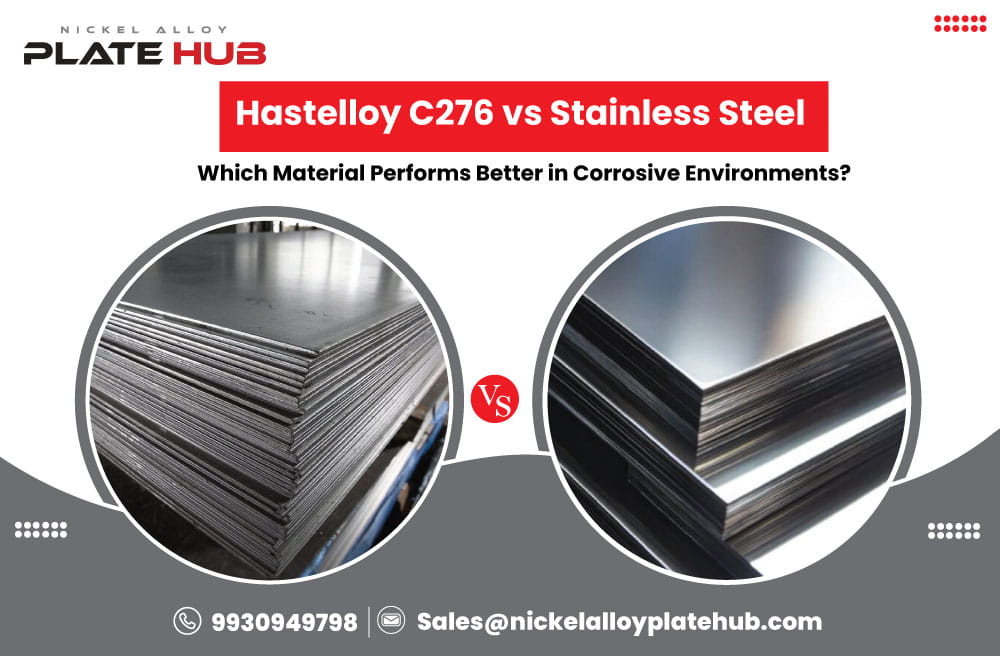
Hastelloy C276 vs Stainless Steel: Which Material Performs Better in Corrosive Environments?

Industrial equipment that is used in harsh marine, chemical, offshore, and high-temperature environments requires substances that are resistant to corrosion, while also maintaining the strength of the machine. Selecting the wrong material can result in premature failure of equipment or costly downtime, as well as higher maintenance costs.

The most popular discussions among procurement experts as well as makers are Hastelloy against Stainless Steel. While stainless steel is acknowledged for its cost-effectiveness and flexibility, Hastelloy C276 is specially designed to stand up to some of the most extreme corrosive environments that are found in the modern industrial sector.

For these metal alloys for industrial use, we at Nickel Alloy Plate Hub shall analyze the two alloys based on mechanical properties, resistance to corrosion, fabrication, cost, in addition to industrial use, and use a Hastelloy vs Stainless Steel comparison to determine which is more durable over time.

Understanding Hastelloy C276

Hastelloy C276 is a nickel-molybdenum-chromium alloy with tungsten additions. It was created to offer outstanding resistance to both oxidizing and decreasing conditions.

Chemically, it is one of the most durable materials that are resistant to corrosion and is in a position to handle:

  • Mineral acids with strong strength
  • Chlorides
  • Sulfuric acid
  • Hydrochloric acid
  • Phosphoric acid
  • Wet chlorine gas
  • Seawater
  • Chemical solvents

In contrast to many stainless steels, Hastelloy C276 can maintain excellent corrosion resistance when welding.

Understanding Stainless Steel

The term “Stainless Steel” refers to an iron-based alloy with at minimum 10.5 percent chromium. Different grades like 304 or 316, 310 as well as Duplex Stainless Steel serve different industrial applications.

Its chromium content creates an oxide layer that protects the material from weathering and minor chemical exposure.

The stainless steel is among the most cost-effective engineering materials due to the following reasons:

  • Excellent availability
  • Good mechanical strength
  • A beautiful finish
  • Fabrication is easy
  • Competitive pricing

However, the resistance to corrosion differs greatly based on the quality and conditions.

Hastelloy vs Stainless Steel: Composition Comparison

PropertyHastelloy C276Stainless Steel 316
Base MetalNickelIron
Chromium15-17%16-18%
NickelBalance (~57%)10-14%
Molybdenum15-17%2-3%
IronSmall amountBalance

The much higher molybdenum and nickel-based content of Hastelloy C276 gives it better resistance to corrosion.

Corrosion Resistance Comparison

Corrosion resistance is the area in which Hastelloy C276 is clearly distinguished from other alloys. We at Nickel Alloy Plate Hub offer you an industrial alloy comparison below:

Hastelloy C276

Hastelloy is extremely effective in:

  • Chloride-rich areas
  • Strong acids
  • Marine applications
  • Oxidizing chemicals
  • Reducing chemicals
  • Crevice corrosion
  • Stress corrosion cracks
  • Pitting corrosion

It is solid even in extremely destructive chemical processing facilities.

Stainless Steel

Standard stainless steel is effective in:

  • Fresh water
  • Food processing
  • Industries in the field of pharmaceuticals
  • Architectural applications
  • Mild chemicals

However, exposure to chlorides or concentrated acids may cause:

  • Pitting
  • Crevice corrosion
  • Cracking in stress corrosion of Chloride
  • Surface deterioration

When you are comparing Hastelloy against Stainless Steel, Hastelloy is the best choice for extremely corrosive environments.

Mechanical Properties

Both materials have great mechanical toughness.

Hastelloy C276

  • Tensile strength high
  • Super durability
  • Good ductility
  • Stability of high temperatures
  • Excellent fatigue resistance

Stainless Steel

  • High-strength
  • Good durability
  • Excellent impact resistance
  • Simple cold working
  • Moderate high-temperature performance

For industrial applications that require a lot of use of aggressive chemicals and thermal cycling, Hastelloy offers greater reliability.

Temperature Performance

The industrial process often exposes equipment to high temperatures.

Hastelloy C276

Exquisite in:

  • Heat exchangers
  • Chemical reactors
  • Incinerators
  • Flue gas scrubbers

Its resistance to corrosion remains strong even at temperatures that are higher than normal operating temperatures.

Stainless Steel

Many grades lose the ability to resist corrosion in the presence of:

  • Continuously high heat
  • Chloride-rich environments
  • Thermal cycling

The stainless grades that are heat-resistant are available, but they are not able to compete with Hastelloy C276 when exposed to extreme chemical conditions.

Weldability and Fabrication

One benefit shared by the two materials is an excellent ability to fabricate.

Hastelloy C276

  • We can easily join them.
  • Good formability
  • Excellent machining when using the correct tool
  • Welds maintain resistance to corrosion

Stainless Steel

  • It is easy to weld
  • Excellent machining
  • Available immediately
  • Lower cost of fabrication

It is usually easier and cheaper to make into the final products.

Cost Comparison

Cost is still an important element.

Stainless Steel

Advantages:

  • Cost of materials is low.
  • Lower costs for machining
  • Worldwide, it is readily available.
  • Affordable replacement

Hastelloy C276

Costs are higher due to:

  • High nickel content
  • Specialized manufacturing
  • Premium corrosion-resistant materials
  • Limited availability

While Hastelloy is more expensive to purchase at a higher price, its long service duration often reduces the total cost of life through a reduction in maintenance time, downtime, and the frequency of replacement.

Industrial Applications

Hastelloy C276 Applications

  • Chemical processing plants
  • Industries of the Petrochemical
  • Equipment for controlling pollution
  • Offshore oil & gas
  • Marine engineering
  • Manufacturing of pharmaceuticals
  • Waste treatment facilities
  • Desulfurization systems

Stainless Steel Applications

  • Food processing
  • Equipment for dairy production
  • Kitchen equipment
  • Construction
  • Automotive components
  • Treatment of water
  • Architectural structures
  • Medical devices

The decision to choose between them depends mostly on the operating conditions, instead of the initial material cost.

Which Material Should You Choose?

You must conduct an industrial alloy comparison before selecting the right alloy for your requirement.

Choose Hastelloy C276 if your application involves:

  • Aggressive acids
  • Chlorides
  • Seawater
  • High temperatures
  • Offshore environments
  • Chemical reactors
  • Corrosive process equipment

Select stainless steel for your project if it needs:

  • Fabrication cost-effective
  • Moderate corrosion resistance
  • Food-grade products
  • Decorated finishes
  • General engineering
  • Indoor industrial use

In the battle of Hastelloy and Stainless Steel, there is no one winner, but only the best material for the appropriate application.

For harsh environments: For extremely corrosive environments, Hastelloy C276 provides unbeatable performance, outstanding endurance, and considerably longer life span. Its resistance to chlorine pitting, strong acidic crevice corrosion, and cracking caused by stress is one of the most reliable corrosion-resistant materials.

However, stainless steel is the most preferred choice in general industrial applications, where exposure to corrosion is minimal, and budget considerations are essential.

For those who want maximum security in the harsh chemical processing environment, this industry-specific alloy review shows clearly that Hastelloy C276 provides superior value over the long term despite the higher initial cost.

1. Which is superior: Hastelloy C276 or Stainless Steel?

Hastelloy C276 excels in environments that are extremely corrosive, such as chlorine, acids, and seawater. Stainless steel is suitable for moderate resistance to corrosion as well as efficient industrial applications.

2. What makes Hastelloy more resistant to corrosion than stainless steel?

Hastelloy contains significant amounts of molybdenum and nickel, making it resistant to the effects of pitting and crevice corrosion cracking from stress corrosion, as well as an aggressive chemical attack much superior to the majority of stainless steel grades.

3. Is Hastelloy C276 really worth more?

Yes. While Hastelloy C276 has the highest initial price, it is extremely durable with lower maintenance requirements and a longer life span, often resulting in lower cost of life.

4. Does Stainless Steel replace Hastelloy in Chemical processing plants?

Only for applications that involve mild chemicals. For chlorides, strong acids, and media that are highly corrosive, Hastelloy C276 is still the most secure and safe material option.

5. What industries typically make use of Hastelloy C276?

Hastelloy C276 is extensively used for chemical processes, petroleum plants, marine engineering, offshore oil and gas production, pharmaceutical manufacturing, pollutant control, as well as wastewater treatment facilities where high corrosion resistance is crucial.

error: Content is protected !!