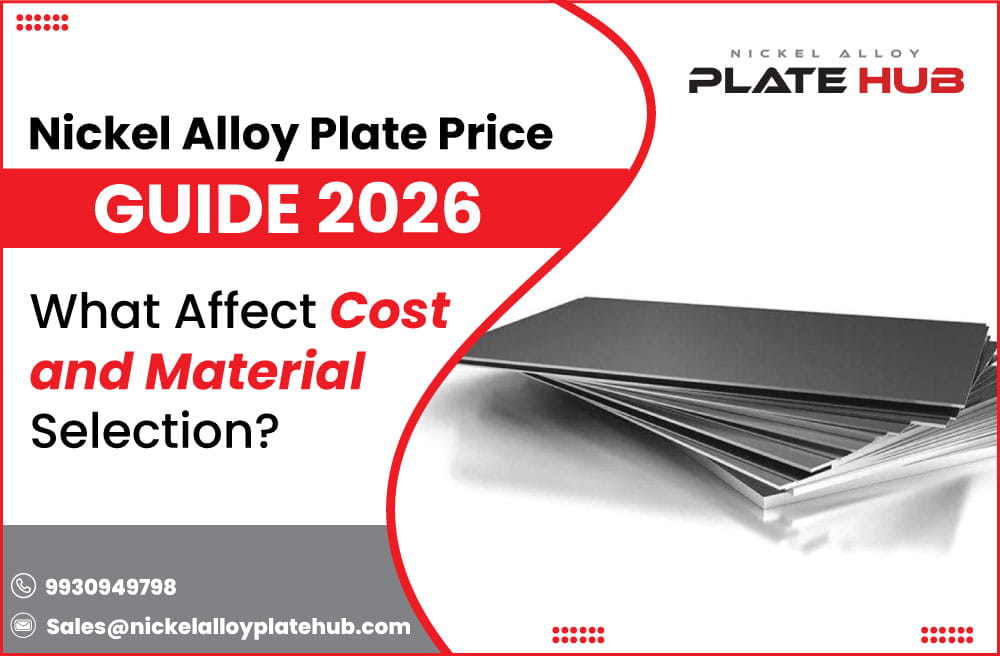
Nickel Alloy Plate Price Guide 2026: What Affects Cost and Material Selection?

In industries where resistance to corrosion as well as high-temperature performance and longevity of service are essential, the nickel alloy plates remain an extremely reliable engineering material. From chemical processing plants to offshore platforms to power production facilities, the special alloys provide exceptional performance in difficult operating conditions.

But one of the most frequent concerns that buyers have is: What determines the nickel alloy plate cost? Unlike conventional stainless steel alloys, the price of the alloy plate is highly dependent on the material composition, production specifications, conditions in the market and the technical specifications.

This price guide for 2026 by Nickel Alloy Plate Hub explains the key factors that affect nickel alloy plate prices and assists buyers in selecting the best material, without sacrificing quality or performance.

Why Nickel Alloy Plates Cost More Than Standard Metals?

Nickel alloy plates can be created with the use of premium metals, such as molybdenum, chromium, nickel cobalt, copper titanium, and iron. These alloying elements significantly increase resistance to acidity, corrosion, oxidation, as well as alkalis, seawater, and extreme temperatures.

Although initially, the nickel alloy plate cost might appear to be superior to stainless steel or carbon steel, the savings over time are significant due to:

  • Lower maintenance costs
  • The equipment’s lifespan is extended
  • Reduced time to shut down
  • Safety improvements in operations
  • Better lifecycle value

For companies operating in highly competitive environments, investing in top-quality nickel alloys is often cheaper than recurrent replacements.

Major Factors That Affect Nickel Alloy Plate Price

1. Alloy Grade

The quality is the most significant element that affects the cost of alloy plates.

Premium grades that contain higher proportions of molybdenum and nickel typically fetch higher prices due to their superior resistance to corrosion and the complexity of their manufacturing.

Examples include:

  • Inconel 625
  • Inconel 718
  • Hastelloy C276
  • Hastelloy C22
  • Monel 400
  • Nickel 200
  • Nickel 201
  • Alloy 800
  • Alloy 825

Each alloy has distinct chemical and mechanical characteristics, choosing grade the most important pricing factor.

2. Nickel Market Prices

Nickel is a widely traded commodity that is traded worldwide.

International nickel prices fluctuate and directly impact prices for nickel alloy plates. Variations in the mining output or geopolitical events, changes in export rules, energy costs, and global industrial demand could all impact the cost of raw materials.

When nickel prices increase, manufacturers generally modify the price of alloy plates accordingly.

3. Plate Thickness and Dimensions

More massive and thicker plates require more raw materials as well as longer production times.

Pricing is determined by:

  • Thickness
  • Width
  • Length
  • Weight
  • Specific requirements for customizing sizing

Standard stock sizes usually are less expensive than custom-designed dimensions.

4. Manufacturing Process

The process of production also influences the cost of alloy plates.

Common manufacturing methods are:

  • Hot-rolled plates
  • Cold-rolled plates
  • Solution-treated plates that have been annealed
  • Plates that have been passivated and picked
  • Precision machined plates

The additional processing can increase manufacturing costs; however, it can also improve efficiency and dimensional accuracy.

5. Surface Finish

Surface finish requirements affect pricing since additional polishing and finishing require additional labor and equipment.

Common finishes are:

  • Mill Finish
  • No. 1 Finish
  • 2B Finish
  • BA Finish
  • Mirror Finish
  • Polished Finish

Industries like pharmaceuticals and food processing typically require top surfaces.

6. Testing and Certifications

The cost of certified materials is higher because they are subjected to a thorough inspection and quality control.

The most common certifications are:

  • Mill Test Certificate (MTC)
  • EN 10204 3.1 Certification
  • PMI Testing
  • Ultrasonic Testing
  • Third-Party Inspection
  • NACE Compliance
  • ASME Certification
  • ASTM Standards

These certifications guarantee the authenticity of the product and ensure compliance with international standards.

7. Quantity Ordered

Bulk purchases generally lower the total nickel alloy cost per kilogram.

Manufacturers typically offer lower prices for:

  • Project orders
  • OEM contracts
  • Annual agreements for procurement
  • Exports shipments
  • Distributor purchases

Smaller custom orders typically have more production costs.

8. Supply Chain and Logistics

Shipping costs can be a major factor in the final cost of landing.

Prices can vary based on:

  • International freight costs
  • Import duties
  • Customs fees
  • Exchange rates for currencies
  • Domestic transport
  • Packaging specifications

In the event of disruptions in global logistics, it is possible to temporarily increase overall costs for procurement.

Choosing the Right Nickel Alloy Plate

Making a decision based solely on the cost of the alloy plate can lead to costly operational failures.

Instead, they should consider:

Operating Temperature

For high-temperature applications, alloys must have outstanding oxidation resistance, such as Inconel as well as Alloy 800.

Corrosive Environment

Chemical plants handling hydrochloric acids, sulphuric acid, and chlorides usually have to use Hastelloy grades.

Marine environments usually have the benefit of Monel alloys because of their resistance to seawater.

Mechanical Strength

Applications that involve pressure vessels, turbines, reactors, and aerospace equipment require the use of alloys with outstanding tensile strength and creep resistance.

Fabrication Requirements

Consider:

  • Weldability
  • Machinability
  • Formability
  • Requirements for heat treatment

Selecting an alloy that is compatible with fabrication processes can reduce manufacturing complexity.

Industries That Use Nickel Alloy Plates

Plates made of nickel are extensively employed in:

  • Oil & Gas
  • Offshore Engineering
  • Petrochemical Plants
  • Chemical Processing
  • Aerospace
  • Marine Engineering
  • Nuclear Power
  • Thermal Power Plants
  • Heat Exchangers
  • Pressure Vessels
  • Fertilizer Plants
  • Pharmaceutical Manufacturing
  • Food Processing
  • Desalination Plants

Every industry has particular alloy grades that are based on the operating conditions.

Tips to Reduce Alloy Plate Cost Without Sacrificing Quality

Buyers can optimise procurement by:

  • The right alloy grade should be selected instead of speculating too much about the material.
  • Making purchases from trusted manufacturers and suppliers who are authorized.
  • Whenever possible, ordering standard dimensions.
  • Consolidating requirements for projects in bulk buys.
  • The process of comparing certified quotations rather than selecting based solely on price.
  • The cost of lifelong care is more important than the purchase price at the beginning.

A high-quality nickel alloy plate can provide years of reliable service, making it a long-term cost-effective investment.

The nickel alloy plate cost in 2026 is based on many factors, such as the alloy’s grade, raw material prices, dimensions, manufacturing process certifications, order volume, and logistics. Although premium alloys require more investment upfront, their superior resistance to heat, corrosion, and mechanical stress results in lower maintenance costs and higher operational reliability.

Instead of focusing on the initial cost of alloy plates, buyers should take into account the application requirements, the life of the product, and the overall value of the lifecycle. A trusted supplier will ensure that you get authentic materials that conform to international standards, while providing the most efficient balance of efficiency and cost.

We are Nickel Alloy Plate Hub; we aid industries in sourcing top-quality nickel alloy plates by providing professional guidance, competitive pricing, and reliable technical assistance to projects across a range of industries.

1. What influences the price of nickel alloy plates most?

The main factors are the quality of the alloy, the market for nickel prices, the dimensions of the plates, the manufacturing process, certifications, and the quantity of orders.

2. What is the reason alloy plate costs more in comparison to stainless steel?

Nickel alloy plates have high-quality alloying elements that offer superior resistance to corrosion, heat resistance, and a longer service life, which makes the process more costly.

3. What nickel alloy is most suitable for industries involved in chemical processing?

Hastelloy C276, Hastelloy C22, Alloy 825, and Inconel 625 are among the most frequently employed grades in highly aggressive chemical environments.

4. Does buying in bulk lower the cost of nickel alloy plates?

Yes. Bulk purchases generally get lower prices due to economies of scale, lower processing costs, and lower logistics costs per unit.

5. What can I do to choose the best nickel alloy plate?

Consider operational temperature, the environment for corrosion, as well as the fabrication requirements, pressure requirements and any necessary industry certifications before selecting the alloy that is most appropriate for your needs.
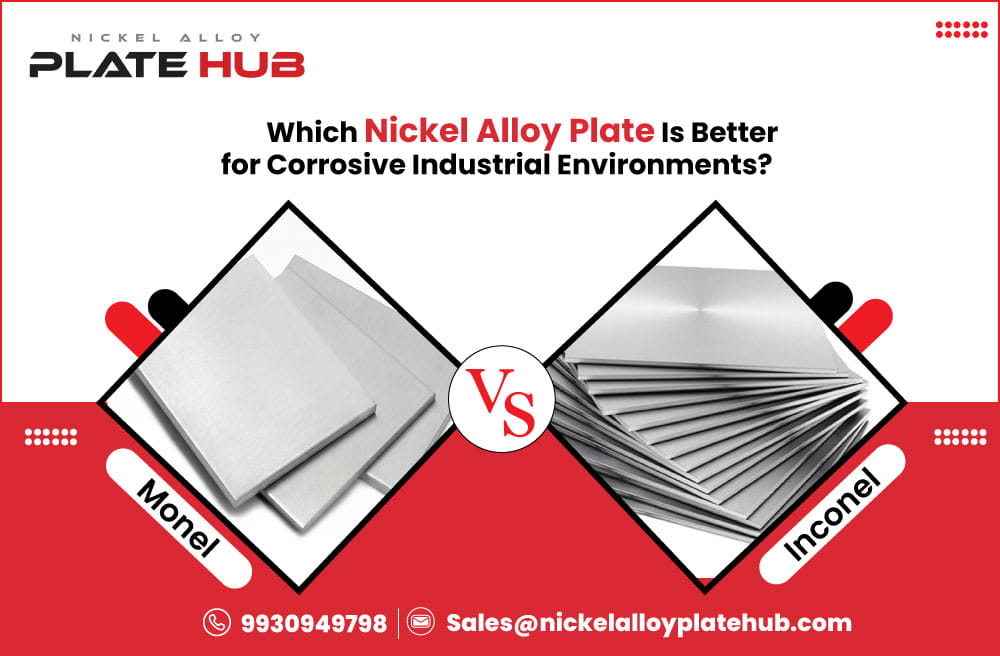
Inconel vs Monel: Which Nickel Alloy Plate Is Better for Corrosive Industrial Environments?

If you are choosing materials for aggressive industrial applications, selecting the right nickel alloy can dramatically impact the life of the equipment, cost, maintenance, and effectiveness. The most dependable metals are Inconel and Monel, which are both known for their superior resistance to corrosion and toughness.

But there is a difference when it comes to Inconel and Monel. Which nickel alloy plate has superior performance in harsh industrial environments? The answer is dependent on the operating conditions, temperature that are used, the chemical composition, and your budget.

In this extensive review of the nickel alloy plates, we at Nickel Alloy Plate Hub examine the characteristics, benefits of applications, limitations, and properties of both alloys using a nickel alloy plate comparison table to assist procurement managers, engineers, and manufacturers in making informed choices.

What Is Inconel?

Inconel is a family of nickel-chromium-based superalloys designed to withstand extreme temperatures, oxidation, and corrosive environments. It is typically composed of iron, nickel, chromium, molybdenum, and niobium, as well as other alloying elements.

The most popular grades are:

  • Inconel 600
  • Inconel 625
  • Inconel 718
  • Inconel 825

Chromium’s addition allows Inconel to form a strong oxide layer, which protects the product from oxidation damage or chemical damage.

What Is Monel?

Monel is mostly a nickel-copper alloy with 60-70 20% of copper and 20% nickel, with tiny amounts of manganese and iron.

Common grades are:

  • Monel 400
  • Monel K-500

Monel is especially praised due to its remarkable resistance to sulfuric acid, hydrofluoric acid, and alkaline solutions, which makes it a popular option for chemical and marine processing industries.

Chemical Composition Comparison

PropertyInconelMonel
Base MetalNickel-ChromiumNickel-Copper
Chromium ContentHighMinimal
Copper ContentLowHigh
Oxidation ResistanceExcellentGood
Marine ResistanceVery GoodExcellent

Chromium’s presence provides Inconel with superior oxidation resistance, while Monel’s high content of copper gives it a superior resistance to marine and reducing chemical environments.

Corrosion Resistance: Inconel vs Monel

Corrosion resistance is typically the main factor in deciding on the best Nickel alloy sheet.

Inconel Performs Better In:

  • High-temperature Oxidation
  • Environments containing nitric acid
  • Sulfur-containing gases
  • Cracking in the stress corrosion of Chloride
  • Oxidizing acids
  • Gas turbines

Monel Performs Better In:

  • Seawater
  • Hydrofluoric acid
  • Alkalis
  • Marine atmospheric conditions
  • Brine solutions
  • Pipelines for saltwater

If your job requires high temperatures or oxidizing chemicals, Inconel is usually the best option.

For marine exposure and seawater corrosion, Monel continues to be one of the best-performing alloys available.

High Temperature Performance

One of the major distinctions in the Inconel vs. Monel comparison is their temperature capability.

Inconel

  • Performs continuously over 1000 degC
  • Tensile strength remains strong even at higher temperatures
  • Excellent creep resistance
  • Amazing resistance to thermal fatigue

Monel

  • Effectively up to 500degC.
  • Great mechanical strength
  • Not designed for extended high-temperature Oxidation

For heat exchangers, furnaces and exhaust systems, as well as aerospace parts, along with power generation systems, Inconel clearly outperforms Monel.

Mechanical Strength

Inconel is a strong tensile material with excellent strength and resistance to fatigue, particularly in grades like Inconel 718.

Monel K-500 has significantly increased resistance over Monel 400 because of precipitation hardening, but it is unable to compete with the strength of high-temperature Inconel.

Weldability and Fabrication

Both alloys provide excellent weldability when using filler metals with appropriate properties.

Inconel

  • Excellent integrity of the weld
  • Needs skilled fabrication techniques
  • Better for high-pressure systems

Monel

  • More streamlined machining when compared to Inconel
  • Good weldability
  • Lower manufacturing complexity

For large-scale fabrication projects, Monel may reduce manufacturing costs.

Typical Industrial Applications

Inconel Applications

  • Petrochemical plants
  • Chemical processing
  • Aerospace engines
  • Nuclear reactors
  • Heat exchangers
  • Pressure vessels
  • Gas turbines
  • Offshore oil platforms
  • Power plants

Monel Applications

  • Marine engineering
  • Shipbuilding
  • Desalination plants
  • Salt production
  • Chemical tanks
  • Pump shafts
  • Propeller shafts
  • Marine valves
  • Offshore piping

Cost Comparison

Cost is a key aspect for this comparison of nickel alloy plates.

Generally:

  • Inconel can be more costly.
  • Monel is relatively cheap.
  • The long-lasting properties of Inconel in extreme environments can offset its higher initial cost of investment.

Instead of focusing on purchase prices, companies must consider the entire life-cycle cost, which includes maintenance, downtime, as well as the frequency of replacement.

Which Industries Prefer Inconel?

Industries that typically employ Inconel are:

  • Oil & Gas
  • Aerospace
  • Nuclear Energy
  • Power Generation
  • Chemical Processing
  • Defense
  • Fertilizer Plants

Which Industries Prefer Monel?

Monel is used extensively in:

  • Marine Engineering
  • Offshore Platforms
  • Shipbuilding
  • Desalination Plants
  • Chemical Storage
  • Marine Hardware Manufacturing

Inconel vs Monel: Quick nickel alloy plate comparison:

FeatureInconelMonel
Corrosion ResistanceExcellentExcellent
Marine ResistanceVery GoodOutstanding
High TemperatureExcellentModerate
Oxidation ResistanceSuperiorGood
Mechanical StrengthHigherHigh
FabricationModerateEasier
CostHigherLower
Best ForChemical environments with high temperaturesApplications for seawater and marine applications

Which Nickel Alloy Plate Should You Choose?

There isn’t a universal answer to the Inconel vs. Monel controversy.

Select Inconel for your application if it needs:

  • Extreme temperatures
  • Oxidizing environments
  • High mechanical loads
  • Long service life
  • Applications for power generation or aerospace

Select Monel when your application involves:

  • Continuous exposure to seawater
  • Marine engineering
  • Hydrofluoric acid
  • Pipes for saltwater
  • Desalination systems
  • Lower operating temperatures

They are both Inconel and Monel are high-quality nickel alloys made to withstand some of the most harsh industrial environments. While Inconel excels in high-temperature oxidizing and high-temperature applications, Monel excels in seawater and marine environments and reduces chemical conditions.

The best choice is contingent on the particular operating conditions, including temperatures and chemical exposure, requirements for fabrication, and your budget. Through careful analysis of these elements, firms can improve the reliability of equipment, cut down on the cost of maintenance, and increase long-term operational efficiency.

For industries that require solid corrosion-resistant products, performing an in-depth comparison of nickel alloy plates before purchase will ensure the highest ROI as well as long-term performance. To buy Inconel or Monel Nickel Alloy Plate of Premium Quality, ‘Get in Touch with Nickel Alloy Plate Hub now and get affordable Inconel or Monel Nickel Alloy Plate Price in India.

Which is superior, Inconel or Monel? 

Inconel is ideal for environments with high temperatures and oxidizing and oxidizing environments, while Monel is suitable for marine and seawater applications, and for reducing acids. The ideal choice will depend on the particular industrial conditions.

What’s the primary distinction between Inconel and Monel?
The main difference is in their chemical composition. Inconel is an alloy made of nickel with superior resistance to oxidation and heat, while Monel is an alloy of nickel and copper that is known for its outstanding corrosion resistance to marine and seawater.

Is Monel more resistant to corrosion than Inconel?
Monel has superior resistance to hydrofluoric and marine acid environments, and Inconel is more resistant to extreme temperatures, oxidation, and a variety of aggressive industrial chemicals that are aggressive.

What nickel alloy is the best to use in chemical plants?
For high-temperature chemical processing, Inconel is the most popular. In chemical applications that require alkalis, seawater, or hydrofluoric acid, Monel is typically the most suitable option.

How do I decide between Inconel and Monel nickel-based alloys?
Consider aspects like operating temperatures, mechanical load, chemical exposure, fabrication requirements, and life-cycle cost. The alloy that is matched to the specific application will ensure maximum performance and durability.

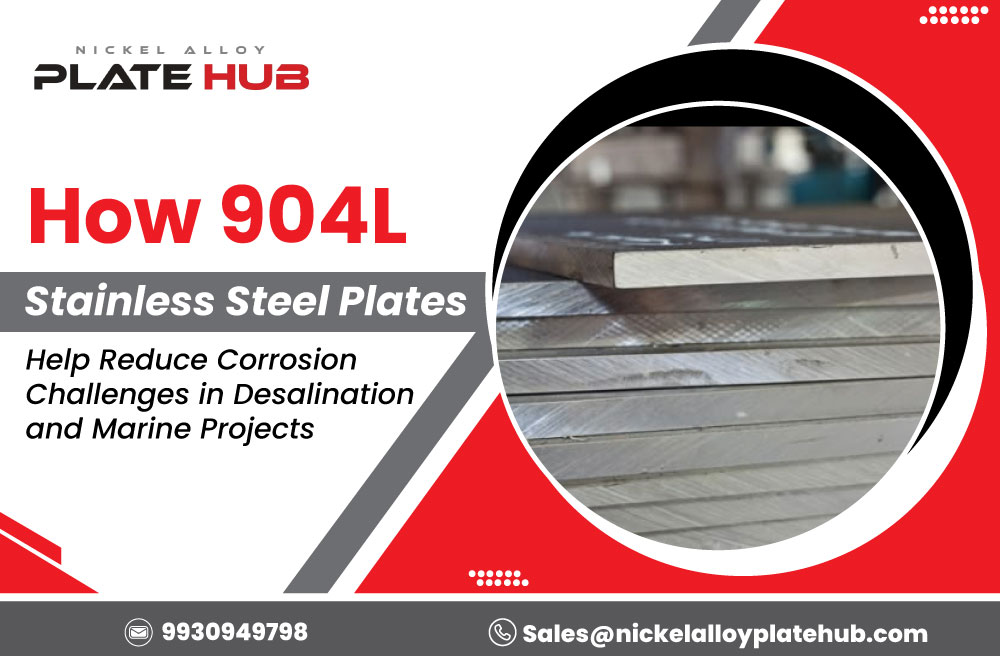
How Do 904L Stainless Steel Plates Help Reduce Corrosion Challenges in Desalination and Marine Projects?

Corrosion is one of the major challenges facing industries that operate in harsh marine or desalination conditions. The constant exposure to seawater chlorides, moisture, as well as aggressive chemicals can dramatically diminish the life of conventional metals and lead to expensive repairs, maintenance, downtime, and repairs. To address these issues, the project manager and engineers are increasingly dependent on using the 904L stainless-steel plate, an austenitic high-alloy stainless steel renowned for its superior resistance to corrosion and endurance.

As desalination facilities or offshore facilities continue to grow across the globe, the need for an efficient, high-quality marine stainless steel sheet has risen significantly. In the variety of stainless steel grades 904L is the most prominent choice as the most popular choice for use in critical areas where resistance to corrosion is crucial.

Understanding 904L Stainless Steel Plate

904L stainless steel plate 904L stainless steel sheet is a low-carbon high-alloy stainless steel that contains substantial amounts of chromium, molybdenum, nickel, and copper. This chemical formula is unique and provides exceptional protection against pitting corrosion, crevice corrosion, and stress corrosion cracking as well as general corrosion, in environments with high levels of chloride.

In contrast to conventional stainless steel grades, 904L has been specifically developed to withstand highly acidic environments in which exposure to seawater and acidic solutions is typical.

Typical Chemical Composition of 904L

  • Chromium (Cr): 19-23%
  • Nickel (Ni): 23-28%
  • Molybdenum (Mo): 4-5%
  • Copper (Cu): 1-2%
  • Carbon (C): Maximum 0.02%

This alloy combination provides 904L with the best resistance to aggressive chemical corrosion and saltwater.

Corrosion Challenges in Marine and Desalination Projects

Desalination and marine structures are operating in some of the most difficult environments on the planet. Components are exposed to:

  • Saltwater immersion
  • Chloride attack
  • High humidity
  • Variations in temperature
  • Cleaning acidic chemicals
  • Microbial corrosion and biofouling

Metals of the past often suffer rapid deterioration in these conditions. The corrosion can cause cracks, structural issues, as well as contamination and costly maintenance programs.

This is the reason why a stainless steel marine grade plate like 904L offers important advantages.

Excellent Resistance to Chloride-Induced Corrosion

One of the most important reasons to choose one of the main reasons for choosing a 904L stainless steel sheet is its remarkable resistance to corrosion caused by chlorides. Chlorides found in seawater may cause crevice corrosion and pitting in the standard stainless steel grades.

The large molybdenum and nickel content of 904L forms an extremely strong protective layer on the surface, which prevents corrosion in the local area even after long exposure to saltwater.

This makes 904L the ideal choice for:

  • Seawater intake systems
  • Offshore platforms
  • Pipelines for marine systems
  • Desalination plant equipment
  • Heat exchangers

Superior Performance in Desalination Plants

Modern desalination facilities depend on the latest equipment, which must stand up to extremely intense salt solutions. Components like evaporators, condensers and pumps, as well as piping systems, are exposed to brine that is corrosive.

A 904L stainless steel sheet provides superior protection from these extreme operating conditions. Its superior resistance to corrosion, scaling and chemical attack allows it to improve the efficiency of plants while cutting maintenance costs.

Benefits in desalination projects include:

  • Longer equipment lifespan
  • Reduced time to shut down
  • Lower cost of replacement
  • Increased operational reliability
  • Improved process efficiency

Outstanding Resistance to Stress Corrosion Cracking

The process of stress corrosion cracking (SCC) is one of the major issues within marine settings. It is caused when tensile strain occurs in conjunction with corrosive conditions, leading to cracks that could lead to catastrophic failures.

The high content of nickel in 904L steel substantially improves resistance to SCC when compared to standard stainless steels that are standard. This feature is particularly useful in piping, pressure vessel structures, offshore structures, and other systems where mechanical stress is inevitable.

Increased Service Life in Offshore Applications

Offshore platforms for oil and gas require materials that can withstand decades of exposure to harsh seawater, severe weather conditions, and chemical pollutants.

As an exceptional stainless steel marine-grade plate, 904L provides:

  • Exceptional durability
  • High mechanical strength
  • Excellent corrosion resistance
  • Reduced maintenance requirements

These features help operators extend the life of their assets and lower overall operating costs.

Common offshore applications are:

  • Platform structures
  • Process equipment
  • Storage tanks
  • Pressure vessels
  • Seawater cooling systems for cooling

Resistance to Acidic Environments

Desalination facilities usually utilize acidic cleaners to get rid of deposits and scale from their equipment. Metals can degrade quickly under these conditions.

The copper content of the 904L stainless steel plates increases the resistance of this plate to sulfuric acid as well as other chemicals that are aggressive. This enables equipment to endure repeated cleaning cycles with no significant material degradation.

Plant operators benefit from:

  • Increased reliability of equipment
  • Reducing corrosion-related failures
  • Lower maintenance costs
  • Improved operational security

Excellent Fabrication and Weldability

Despite the high content of the alloy, 904L is a great material for manufacturing characteristics. It can be formed, cut or welded and then machined with conventional techniques for fabrication.

This flexibility makes it ideal to manufacture complex components that are used in desalination and marine projects.

Fabrication benefits are:

  • Good weldability
  • Flexible bending and forming
  • Welded joints that are strong and durable
  • Compatible with industrial manufacturing processes

These attributes allow these features to make the 904L stainless steel sheet an efficient and practical option for engineers and equipment producers.

Cost Savings Through Reduced Maintenance

Although 904L might have a higher cost at first than the standard steel, the lasting value is significant.

A premium stainless steel marine-grade plate will reduce the need:

  • Regular inspections
  • Corrosion repairs
  • Component replacement
  • Production stops

This results in a lower cost of ownership over the lifetime of the construction project.

In critical infrastructures where reliability is critical, investing in 904L frequently can be more affordable than inferior materials that require regular maintenance.

Why Choose Nickel Alloy Plate Hub for 904L Stainless Steel Plates?

Nickel Alloy Plate Hub is a reliable supplier of top-quality 904L stainless steel plate products for offshore, marine, desalination, and industrial uses. Our plates come from trusted manufacturers and meet the international standards for quality.

We can provide:

  • Top-quality materials and certifications for materials
  • Competitive pricing
  • Customized dimensions
  • Fast delivery schedules
  • Technical support and assistance
  • Global supply capabilities

If you’re building desalination plants or upgrading offshore facilities, Nickel Alloy Plate Hub offers reliable solutions that are tailored to your specific project needs.

Corrosion is one of the biggest challenges facing the marine and desalination industries. Making the right choice of material is essential to ensure longevity, reliability, safety, and cost-effectiveness. The 904L stainless-steel plate has been proven to be among the most effective options to combat corrosion in chloride-rich, chemically hostile environments.

With its exceptional resistance to crevice corrosion, pitting, stress corrosion cracking, and acids, 904L continues to be a top choice for stainless steel marine grade plates to be used in critical infrastructure across the globe. By investing in premium materials made from nickel alloy plate hub companies can improve their operational efficiency as well as extend the lifespan of equipment and cut down on maintenance costs for many years to come.

1. What can a 904L stainless steel plate be employed for?

The 904L stainless steel sheet is extensively employed in desalination facilities, offshore platforms, marine structures, chemical processing equipment, heat exchangers, as well as seawater handling systems because of its outstanding resistance to corrosion.

2. What makes 904L a high-quality marine stainless steel sheet?

904L is thought to be a marine-grade stainless steel plate since it has superior resistance to corrosion caused by chloride crevice corrosion, pitting, and exposure to seawater.

3. How does 904L compare with stainless steel 316?

904L has higher levels of molybdenum and nickel than stainless steel, which provides improved resistance to corrosion in extremely challenging chemical and marine environments.

4. Can 904L stainless steel be used for plants that desalinate water?

Yes, 904L stainless steel is ideal for desalination plants since it is able to stand up to concentrated brine, seawater, and acidic cleaning chemicals. It also maintains long-term efficiency.

5. What are the benefits from using stainless steel 904L plates for offshore projects?

The primary benefits are greater resistance to corrosion, longer service lives, lower maintenance costs, as well as resistance to cracking caused by stress corrosion and increased performance in extreme offshore environments.

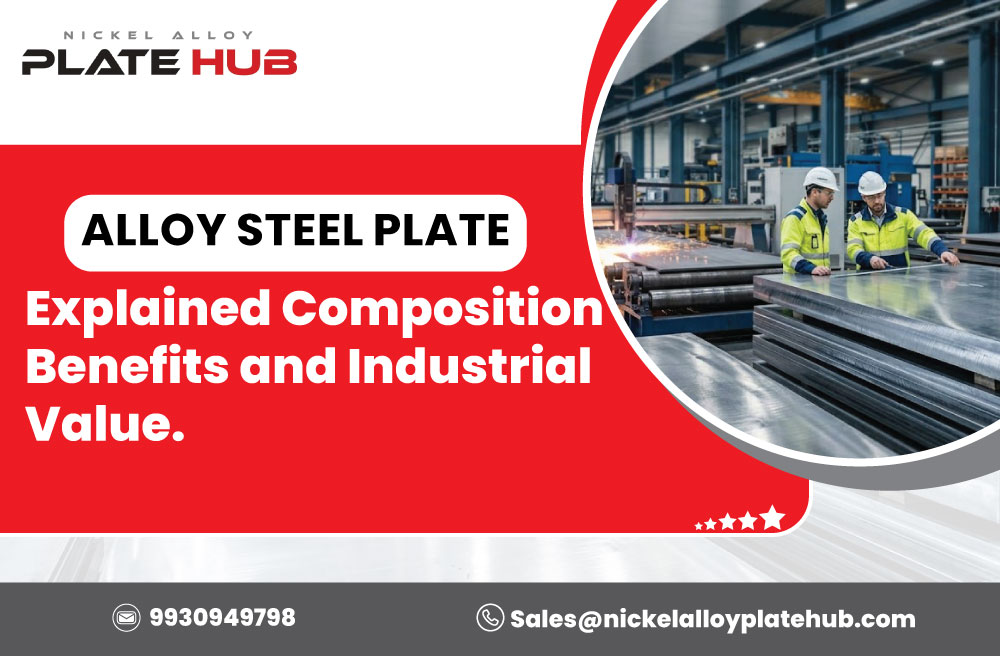
Alloy Steel Plate Explained: Composition, Benefits and Industrial Value

In today’s competitive industrial world, the selection of materials is crucial to making sure durability, efficiency, and long-term efficiency. As one of the most frequently utilized materials for engineering, alloy steel is distinguished by its extraordinary durability, strength, and flexibility. From heavy machinery and pressure vessels to energy and construction infrastructure, steel alloy plates are now indispensable in various industries.

In this article, we at Nickel Alloy Plate Hub focus on the components, benefits of applications, as well as the industrial benefits of steel alloy plates, as well as discussing their connection with stainless steel and other alloys with high performance plates.

What is an Alloy Steel Plate?

The term “alloy steel plate” refers to the alloy steel sheet that is a product of steel made by combining iron with specific alloying elements like molybdenum, chromium, nickel, manganese, vanadium, and silicon. The addition of these elements is to improve the chemical and mechanical qualities of the material above what can be achieved with standard carbon steel.

Depending on the type of composition and purpose of use, steel plates may provide higher strength, hardness, and wear resistance, as well as corrosion resistance and the ability to withstand heat. These properties make them ideal for harsh industrial environments, where steel is susceptible to failure.

Composition of Alloy Steel Plates

The quality of steel alloy plates is determined by their chemical structure. Various alloying elements contribute unique properties:

Chromium (Cr)

Chromium increases resistance to corrosion, oxidation, and hardness. It is among the main elements utilized in both alloy and stainless steel grades.

Nickel (Ni)

Nickel improves the durability, impact resistance, and resistance to corrosion, particularly at low temperatures.

Molybdenum (Mo)

Molybdenum enhances strength at high temperatures and also improves resistance to crevice and pitting corrosion.

Manganese (Mn)

Manganese improves resistance to wear as well as tensile strength and the ability to harden.

Silicon (Si)

Silicon enhances oxidation resistance and is a contributor to a stronger.

Vanadium (V)

Vanadium helps refine grain structure, enhancing durability and fatigue resistance.

The exact combination of these elements results in specific alloy plates specifically made for specific industrial uses.

Alloy Steel Plate vs Stainless Steel

A lot of buyers make the mistake of comparing the alloy steel plate against stainless steel plates when deciding on the right industrial project materials.

While both types of steel are composed of alloying elements, stainless steel usually includes at least 10.5 percent chromium. This gives the best corrosion resistance. Alloy steel, on the contrary, is focused on creating a balance of hardness, strength, cost-effectiveness, and wear resistance.

Key Differences

PropertyAlloy Steel PlateStainless Steel Plate
StrengthExcellentGood to Excellent
Corrosion ResistanceModerate to HighVery High
CostMore EconomicalHigher
Heat ResistanceExcellentExcellent
Wear ResistanceOutstandingModerate
Industrial ApplicationsHeavy Equipment, Pressure VesselsFood Processing, Marine, Chemical Industries

For projects that require maximum protection against corrosion, stainless steel could be the ideal option. But if durability and strength are important, alloy steel plates typically offer more value.

Benefits of Alloy Steel Plates

1. Superior Strength

One of the main positives of plates made from alloy steel is the remarkable strength-to-weight ratio. They can withstand massive loads and extreme mechanical stress without causing deformation.

2. Enhanced Durability

Alloy plates are designed to withstand the most demanding working conditions, making them perfect for long-term industrial applications.

3. Improved Wear Resistance

Industries like construction, mining, and material handling depend on steel alloy plates due to their superior resistance to wear and abrasion.

4. Heat and Pressure Resistance

Many alloy steel grades keep their structural integrity despite extreme pressures and temperatures and are therefore suitable for pressure vessels, boilers and power generation equipment.

5. Corrosion Protection

While not as resistant to corrosion as stainless steel alloys, steel plates provide significant protection against oxidation, rust and chemical exposure.

6. Cost Efficiency

In comparison to stainless steel grades, premium alloy steel plates typically offer a lower cost solution with excellent performance.

Industrial Applications of Alloy Steel Plates

The variety in alloy steel plates is what has led to their widespread use across many industries.

Oil and Gas Industry

The alloy steel plate is commonly employed in drilling equipment, pipelines, offshore platforms, and pressure vessels because of its capacity to withstand harsh operating conditions.

Power Generation

Nuclear, thermal, and renewable energy sources employ alloy plates for boilers, heat exchangers, turbines, as well as structural components.

Construction and Infrastructure

Bridges, high-rise structures, industrial facilities, bridges, and large structural frameworks typically contain alloy steel plates for increased load-carrying capacity for carrying loads.

Mining and Material Handling

The mining industry requires materials that are able to stand up to the rigors of abrasion. Steel plates made of alloy are often employed in conveyors, crushers, chutes, and excavation equipment.

Shipbuilding and Marine Engineering

Particularly designed alloys are used to make marine products where toughness as well as resistance to the environmental elements are vital.

Chemical Processing

Chemical plants employ steel alloys in reactors, storage tanks, and processing equipment exposed to high temperatures and corrosive substances.

Why Alloy Steel Plates Continue to Grow in Demand?

In the quest for more robust, lighter materials, the demand for steel alloy plates continues to grow. Modern manufacturing technology has enabled the creation of new alloys that provide enhanced performance and lower maintenance costs.

The increasing attention to infrastructure development and renewable energy projects, and the modernization of industrial processes around the world, has also boosted demand for alloy plates. Companies are now recognizing the long-term advantages by investing in premium alloy steel products.

Choosing the Right Alloy Steel Plate Supplier

The choice of a trusted supplier is crucial to guarantee that the product is of high quality and in compliance with international standards. A reputable supplier can provide:

  • Certified test reports on material quality
  • International-grade alloy steel plates
  • Customized dimensions and thicknesses
  • Competitive pricing
  • International delivery, reliable logistics, and reliability
  • Support for material selection and technical assistance with material selection

At Nickel Alloy Plate Hub, customers have access to an extensive selection of alloy steel plates, stainless steel plates, as well as special alloy plates that are designed to meet the demands of industrial use.

The aluminum alloy plate is much more than a typical steel product. The carefully engineered material offers outstanding durability, strength, wear resistance, as well as thermal resistance, and makes it a key material for modern-day industry. While stainless steel is the top choice for acidic environments, alloy steel plates provide excellent performance and are a great high-end value for heavy-duty use.

As the demands of industrialization continue to grow, the demand for alloy plates will be crucial to construct stronger, safer as well as more effective infrastructure around the world.

1. What exactly is the alloyed steel plate utilized for?

Alloy steel plates can be found in the construction industry as well as oil and gas power generation, pressure vessels, mining, shipbuilding, and heavy equipment due to their toughness and endurance.

2. What makes alloy steel different in comparison to stainless steel?

Alloy steel concentrates on toughness, strength, and wear resistance. Stainless steel has greater resistance to corrosion due to its higher levels of chromium.

3. Are alloy steel plates corrosion-resistant?

Yes, some alloy steel plates have good corrosion resistance, but they don’t always meet the strength levels for corrosion resistance of stainless steel.

4. Which industries employ the most alloy plates?

The major users are mining, oil and gas construction, power generation, transport, chemical processing, along with the marine industry.

5. Why should you choose alloy steel plates instead of carbon steel?

Alloy steel plates provide greater durability, strength, and heat resistance, as well as wear resistance and overall performance, compared to carbon steel in the traditional form.

error: Content is protected !!