From Raw Material to Finished Plate: How Nickel Alloy Plates Are Manufactured

Nickel alloys are one of the most durable engineering materials that are used in all industries that require exceptional resistance to oxidation, corrosion, pressure, and extreme temperatures. From chemical processing plants to offshore oil platforms to power generation and aerospace facilities, the plates are developed to function where other metals don’t.

However, the process of making a premium nickel alloy plate takes much more than simply melting the metal, then rolling it into a shape. The manufacturing process requires several precise stages that each contribute to the final strength, corrosion, and dimensional precision.

In this article at Nickel Alloy Plate Hub look at the entire manufacturing process, which includes alloy plate production from selecting the best raw materials to producing an end-to-end plate that is ready for industrial use.

Step 1: Raw Material Selection

Each high-quality nickel alloy starts with carefully chosen raw materials.

The alloy grade is determined by the alloy; the producers mix the elements of nickel with alloying elements like:

  • Chromium
  • Molybdenum
  • Iron
  • Copper
  • Titanium
  • Niobium
  • Cobalt
  • Tungsten

The precise chemical composition determines whether the finished product is an Inconel(r), Monel(r), Hastelloy(r), or any other alloy based on nickel.

Raw materials with high purity are vital because even minor impurities may decrease the resistance to corrosion and affect mechanical properties.

Step 2: Melting the Alloy

After the raw materials have been measured according to the needed composition, they are then melted in specialized furnaces.

Common melting technologies include:

  • Electric Arc Furnace (EAF)
  • Vacuum Induction Melting (VIM)
  • Vacuum Arc Remelting (VAR)
  • Electroslag Remelting (ESR)

Vacuum melting eliminates gases that are dissolved and reduces the risk of contamination, resulting in more sanitary alloys that have a consistent chemistry.

At this point, metallurgists are constantly monitoring:

  • Chemical composition
  • Temperature
  • Oxygen levels
  • Carbon content

This ensures that all heats meet international standards.

Step 3: Casting into Ingots

After the melting process in alloy plate production, it is put into moulds to create massive ingots.

Ingots are used as the raw material used in plate production.

The proper cooling process is vitally important as it can lead to:

  • Internal cracks
  • Porosity
  • Segregation
  • Structural defects

Advanced manufacturers typically use controlled cooling techniques to keep an even grain structure.

Step 4: Homogenization Heat Treatment

Before rolling can begin, the ingots go through homogenization.

This treatment uses heat:

  • Chemical composition is equalized
  • Reduces stress inside the body
  • Improves grain uniformity
  • Improves the working efficiency

The ingots stay inside the furnaces for hours, at a temperature controlled before the ingots cool down slowly.

This allows the alloy to be prepared for deformation during the process of rolling.

Step 5: Hot Rolling

Hot rolling is among the most important steps in the nickel alloy plate manufacturing process.

The heated ingot goes through powerful mills repeatedly for rolling.

Each time, the thickness decreases while the length of the plate.

Benefits include:

  • Grain refinement
  • Increased toughness
  • Stronger mechanical force
  • Structural consistency is improved

The temperature of the roll is carefully monitored because nickel alloys can be extremely hard if they are processed improperly.

Step 6: Annealing

Following hot rolling, plates are subjected to annealing.

Annealing restores ductility after deformation.

This is also a heat treatment

  • Reduces stress in the body
  • Enhances resistance to corrosion
  • Refines microstructure
  • Enhances machinability

Every alloy grade has an individual annealing temperature as well as a cooling process.

For instance, some nickel alloys require quick water quenching, while other alloys can cool naturally.

Step 7: Pickling and Surface Cleaning

The heat treatment creates oxide-based scales that are formed on the surface of the plate.

Manufacturers take off these scales with pickling solutions made of precisely controlled acids.

The process of cleaning:

  • Eliminates oxygenation
  • Improves surface finish
  • The plate is prepared to be inspected
  • Restores properties that resist corrosion

Modern facilities also utilize ecologically controlled pickling systems to reduce the amount of waste.

Step 8: Cold Rolling (When Required)

Certain applications require tighter dimension tolerances and smoother surfaces.

In these situations, plates undergo cold rolling immediately following annealing.

Cold rolling provides:

  • More accurate thickness
  • Superior surface finish
  • More hardness
  • Better flatness

Not all nickel alloy plates require this process; however, industries like aerospace typically require cold-finished products.

Step 9: Cutting and Finishing

After the rolling process is completed, the plates are cut to meet the specifications of the customer.

Manufacturers employ:

  • CNC plasma cutting
  • Waterjet cutting
  • Laser cutting
  • Mechanical shearing

Edges can be:

  • Mill edge
  • Edges of sheared
  • Slit edge

Surface finishes may include:

  • Hot Rolled
  • Cold Rolled
  • Bright Annealed
  • Polished
  • No.1 Finish

Custom dimensions are designed as per the requirements of the project.

Step 10: Quality Inspection

Each plate is subjected to a rigorous examination before dispatch.

The most common quality checks are:

Chemical Analysis

Verifies alloy composition.

Mechanical Testing

Evaluates:

  • Tensile strength
  • Yield strength
  • Elongation
  • Hardness

Non-Destructive Testing

Methods comprise:

  • Ultrasonic Testing (UT)
  • Dye Penetrant Testing (PT)
  • Radiographic Testing (RT)

Dimensional Inspection

Checks:

  • Thickness
  • Width
  • Length
  • Flatness
  • Surface quality

These tests ensure compliance with ASTM, ASME, EN and international specifications for customers.

Step 11: Certification and Documentation

Industrial buyers require complete traceability.

All nickel alloy plates come delivered with a document, for example:

  • Mill Test Certificate (MTC)
  • Heat Number
  • Material Traceability Report
  • Chemical Analysis Report
  • Mechanical Test Certificate
  • NACE Compliance (where appropriate)
  • PMI Reports (Positive Material Identification)

These documents offer assurance of the quality of the product and ensure compliance with regulations.

Step 12: Packaging and Dispatch

The proper packaging will protect the plates during transport.

Common packaging techniques are:

  • Wooden pallets
  • Waterproof wrap
  • Edge protectors
  • Plastic film
  • Steel strapping
  • Export-grade wooden crates

Each plate is marked with:

  • The number for heat
  • Grade
  • Size
  • Batch details

This will ensure that you are identified upon delivery. This ensures that you are identified.

Why Manufacturing Quality Matters

A manufacturing procedure’s quality directly impacts what happens to nickel alloy plates when in service.

A well-designed plate will provide:

  • Superior resistance to corrosion
  • High-temperature durability
  • Longer service life
  • Reduced maintenance costs
  • Excellent welding capabilities
  • Performance that is reliable in harsh environments

Manufacturing practices that are not up to par, on the other hand, can lead to early failure, costly repairs, as well as operational downtime.


The nickel alloy plate manufacturing process is a highly sophisticated blend of engineering precision, metallurgy, and rigorous quality control. From choosing top raw materials and vacuum melting to hot rolling and the annealing process, testing and certification, each process plays an important part in the production of plates that can withstand the harshest industrial conditions in the world.

Understanding the entire nickel alloy plate manufacturing process helps buyers examine suppliers with greater accuracy and select materials that provide long-term stability, security and value. Working with a reputable producer ensures that every nickel alloy plate is in line with global quality standards and works consistently in the most demanding of applications.

To buy Nickel Alloy Plates of Premium Quality at an affordable nickel alloy plates Price in India, ‘Get in Touch’ with us at Nickel Alloy Plate Hub today.

1. What is the manufacturing procedure?

The manufacturing procedure includes selecting the raw material, casting, alloy melting, heat treatment, finishing, quality inspection, and certification before shipping.

2. Why does vacuum melting get used in the production of alloy plates?

Vacuum melting eliminates impurities, dissolved gases, and pollutants and produces clean nickel alloys with better mechanical properties and improved resistance to corrosion.

3. What is the process of having nickel alloy plates evaluated to determine their quality?

Manufacturers conduct analyses of chemical composition, tension tests, hardness testing, as well as ultrasonic testing, dimensional examination, along with the process of Positive Material Identification (PMI) to guarantee the quality of their products.

4. What standards are used when producing alloy plates?

Plates made of nickel alloy are typically produced in accordance with ASTM, ASME, EN, DIN, and customer-specific international standards, based on their use in industry.

5. Why is heat treatment so important when manufacturing nickel alloy plates?

Heat treatment increases ductility, eases internal stress, and improves corrosion resistance. enhances the grain structure and helps ensure that the alloy has its desired mechanical properties.

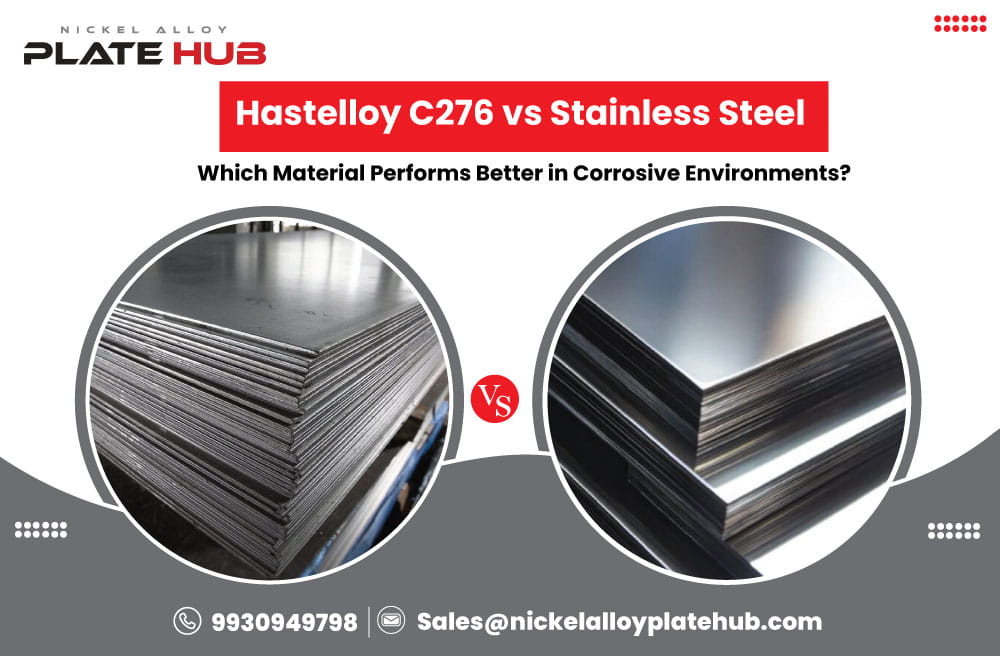
Hastelloy C276 vs Stainless Steel: Which Material Performs Better in Corrosive Environments?

Industrial equipment that is used in harsh marine, chemical, offshore, and high-temperature environments requires substances that are resistant to corrosion, while also maintaining the strength of the machine. Selecting the wrong material can result in premature failure of equipment or costly downtime, as well as higher maintenance costs.

The most popular discussions among procurement experts as well as makers are Hastelloy against Stainless Steel. While stainless steel is acknowledged for its cost-effectiveness and flexibility, Hastelloy C276 is specially designed to stand up to some of the most extreme corrosive environments that are found in the modern industrial sector.

For these metal alloys for industrial use, we at Nickel Alloy Plate Hub shall analyze the two alloys based on mechanical properties, resistance to corrosion, fabrication, cost, in addition to industrial use, and use a Hastelloy vs Stainless Steel comparison to determine which is more durable over time.

Understanding Hastelloy C276

Hastelloy C276 is a nickel-molybdenum-chromium alloy with tungsten additions. It was created to offer outstanding resistance to both oxidizing and decreasing conditions.

Chemically, it is one of the most durable materials that are resistant to corrosion and is in a position to handle:

  • Mineral acids with strong strength
  • Chlorides
  • Sulfuric acid
  • Hydrochloric acid
  • Phosphoric acid
  • Wet chlorine gas
  • Seawater
  • Chemical solvents

In contrast to many stainless steels, Hastelloy C276 can maintain excellent corrosion resistance when welding.

Understanding Stainless Steel

The term “Stainless Steel” refers to an iron-based alloy with at minimum 10.5 percent chromium. Different grades like 304 or 316, 310 as well as Duplex Stainless Steel serve different industrial applications.

Its chromium content creates an oxide layer that protects the material from weathering and minor chemical exposure.

The stainless steel is among the most cost-effective engineering materials due to the following reasons:

  • Excellent availability
  • Good mechanical strength
  • A beautiful finish
  • Fabrication is easy
  • Competitive pricing

However, the resistance to corrosion differs greatly based on the quality and conditions.

Hastelloy vs Stainless Steel: Composition Comparison

PropertyHastelloy C276Stainless Steel 316
Base MetalNickelIron
Chromium15-17%16-18%
NickelBalance (~57%)10-14%
Molybdenum15-17%2-3%
IronSmall amountBalance

The much higher molybdenum and nickel-based content of Hastelloy C276 gives it better resistance to corrosion.

Corrosion Resistance Comparison

Corrosion resistance is the area in which Hastelloy C276 is clearly distinguished from other alloys. We at Nickel Alloy Plate Hub offer you an industrial alloy comparison below:

Hastelloy C276

Hastelloy is extremely effective in:

  • Chloride-rich areas
  • Strong acids
  • Marine applications
  • Oxidizing chemicals
  • Reducing chemicals
  • Crevice corrosion
  • Stress corrosion cracks
  • Pitting corrosion

It is solid even in extremely destructive chemical processing facilities.

Stainless Steel

Standard stainless steel is effective in:

  • Fresh water
  • Food processing
  • Industries in the field of pharmaceuticals
  • Architectural applications
  • Mild chemicals

However, exposure to chlorides or concentrated acids may cause:

  • Pitting
  • Crevice corrosion
  • Cracking in stress corrosion of Chloride
  • Surface deterioration

When you are comparing Hastelloy against Stainless Steel, Hastelloy is the best choice for extremely corrosive environments.

Mechanical Properties

Both materials have great mechanical toughness.

Hastelloy C276

  • Tensile strength high
  • Super durability
  • Good ductility
  • Stability of high temperatures
  • Excellent fatigue resistance

Stainless Steel

  • High-strength
  • Good durability
  • Excellent impact resistance
  • Simple cold working
  • Moderate high-temperature performance

For industrial applications that require a lot of use of aggressive chemicals and thermal cycling, Hastelloy offers greater reliability.

Temperature Performance

The industrial process often exposes equipment to high temperatures.

Hastelloy C276

Exquisite in:

  • Heat exchangers
  • Chemical reactors
  • Incinerators
  • Flue gas scrubbers

Its resistance to corrosion remains strong even at temperatures that are higher than normal operating temperatures.

Stainless Steel

Many grades lose the ability to resist corrosion in the presence of:

  • Continuously high heat
  • Chloride-rich environments
  • Thermal cycling

The stainless grades that are heat-resistant are available, but they are not able to compete with Hastelloy C276 when exposed to extreme chemical conditions.

Weldability and Fabrication

One benefit shared by the two materials is an excellent ability to fabricate.

Hastelloy C276

  • We can easily join them.
  • Good formability
  • Excellent machining when using the correct tool
  • Welds maintain resistance to corrosion

Stainless Steel

  • It is easy to weld
  • Excellent machining
  • Available immediately
  • Lower cost of fabrication

It is usually easier and cheaper to make into the final products.

Cost Comparison

Cost is still an important element.

Stainless Steel

Advantages:

  • Cost of materials is low.
  • Lower costs for machining
  • Worldwide, it is readily available.
  • Affordable replacement

Hastelloy C276

Costs are higher due to:

  • High nickel content
  • Specialized manufacturing
  • Premium corrosion-resistant materials
  • Limited availability

While Hastelloy is more expensive to purchase at a higher price, its long service duration often reduces the total cost of life through a reduction in maintenance time, downtime, and the frequency of replacement.

Industrial Applications

Hastelloy C276 Applications

  • Chemical processing plants
  • Industries of the Petrochemical
  • Equipment for controlling pollution
  • Offshore oil & gas
  • Marine engineering
  • Manufacturing of pharmaceuticals
  • Waste treatment facilities
  • Desulfurization systems

Stainless Steel Applications

  • Food processing
  • Equipment for dairy production
  • Kitchen equipment
  • Construction
  • Automotive components
  • Treatment of water
  • Architectural structures
  • Medical devices

The decision to choose between them depends mostly on the operating conditions, instead of the initial material cost.

Which Material Should You Choose?

You must conduct an industrial alloy comparison before selecting the right alloy for your requirement.

Choose Hastelloy C276 if your application involves:

  • Aggressive acids
  • Chlorides
  • Seawater
  • High temperatures
  • Offshore environments
  • Chemical reactors
  • Corrosive process equipment

Select stainless steel for your project if it needs:

  • Fabrication cost-effective
  • Moderate corrosion resistance
  • Food-grade products
  • Decorated finishes
  • General engineering
  • Indoor industrial use

In the battle of Hastelloy and Stainless Steel, there is no one winner, but only the best material for the appropriate application.

For harsh environments: For extremely corrosive environments, Hastelloy C276 provides unbeatable performance, outstanding endurance, and considerably longer life span. Its resistance to chlorine pitting, strong acidic crevice corrosion, and cracking caused by stress is one of the most reliable corrosion-resistant materials.

However, stainless steel is the most preferred choice in general industrial applications, where exposure to corrosion is minimal, and budget considerations are essential.

For those who want maximum security in the harsh chemical processing environment, this industry-specific alloy review shows clearly that Hastelloy C276 provides superior value over the long term despite the higher initial cost.

1. Which is superior: Hastelloy C276 or Stainless Steel?

Hastelloy C276 excels in environments that are extremely corrosive, such as chlorine, acids, and seawater. Stainless steel is suitable for moderate resistance to corrosion as well as efficient industrial applications.

2. What makes Hastelloy more resistant to corrosion than stainless steel?

Hastelloy contains significant amounts of molybdenum and nickel, making it resistant to the effects of pitting and crevice corrosion cracking from stress corrosion, as well as an aggressive chemical attack much superior to the majority of stainless steel grades.

3. Is Hastelloy C276 really worth more?

Yes. While Hastelloy C276 has the highest initial price, it is extremely durable with lower maintenance requirements and a longer life span, often resulting in lower cost of life.

4. Does Stainless Steel replace Hastelloy in Chemical processing plants?

Only for applications that involve mild chemicals. For chlorides, strong acids, and media that are highly corrosive, Hastelloy C276 is still the most secure and safe material option.

5. What industries typically make use of Hastelloy C276?

Hastelloy C276 is extensively used for chemical processes, petroleum plants, marine engineering, offshore oil and gas production, pharmaceutical manufacturing, pollutant control, as well as wastewater treatment facilities where high corrosion resistance is crucial.

Nickel Alloy Plate Price Guide 2026: What Affects Cost and Material Selection?

In industries where resistance to corrosion as well as high-temperature performance and longevity of service are essential, the nickel alloy plates remain an extremely reliable engineering material. From chemical processing plants to offshore platforms to power production facilities, the special alloys provide exceptional performance in difficult operating conditions.

But one of the most frequent concerns that buyers have is: What determines the nickel alloy plate cost? Unlike conventional stainless steel alloys, the price of the alloy plate is highly dependent on the material composition, production specifications, conditions in the market and the technical specifications.

This price guide for 2026 by Nickel Alloy Plate Hub explains the key factors that affect nickel alloy plate prices and assists buyers in selecting the best material, without sacrificing quality or performance.

Why Nickel Alloy Plates Cost More Than Standard Metals?

Nickel alloy plates can be created with the use of premium metals, such as molybdenum, chromium, nickel cobalt, copper titanium, and iron. These alloying elements significantly increase resistance to acidity, corrosion, oxidation, as well as alkalis, seawater, and extreme temperatures.

Although initially, the nickel alloy plate cost might appear to be superior to stainless steel or carbon steel, the savings over time are significant due to:

  • Lower maintenance costs
  • The equipment’s lifespan is extended
  • Reduced time to shut down
  • Safety improvements in operations
  • Better lifecycle value

For companies operating in highly competitive environments, investing in top-quality nickel alloys is often cheaper than recurrent replacements.

Major Factors That Affect Nickel Alloy Plate Price

1. Alloy Grade

The quality is the most significant element that affects the cost of alloy plates.

Premium grades that contain higher proportions of molybdenum and nickel typically fetch higher prices due to their superior resistance to corrosion and the complexity of their manufacturing.

Examples include:

  • Inconel 625
  • Inconel 718
  • Hastelloy C276
  • Hastelloy C22
  • Monel 400
  • Nickel 200
  • Nickel 201
  • Alloy 800
  • Alloy 825

Each alloy has distinct chemical and mechanical characteristics, choosing grade the most important pricing factor.

2. Nickel Market Prices

Nickel is a widely traded commodity that is traded worldwide.

International nickel prices fluctuate and directly impact prices for nickel alloy plates. Variations in the mining output or geopolitical events, changes in export rules, energy costs, and global industrial demand could all impact the cost of raw materials.

When nickel prices increase, manufacturers generally modify the price of alloy plates accordingly.

3. Plate Thickness and Dimensions

More massive and thicker plates require more raw materials as well as longer production times.

Pricing is determined by:

  • Thickness
  • Width
  • Length
  • Weight
  • Specific requirements for customizing sizing

Standard stock sizes usually are less expensive than custom-designed dimensions.

4. Manufacturing Process

The process of production also influences the cost of alloy plates.

Common manufacturing methods are:

  • Hot-rolled plates
  • Cold-rolled plates
  • Solution-treated plates that have been annealed
  • Plates that have been passivated and picked
  • Precision machined plates

The additional processing can increase manufacturing costs; however, it can also improve efficiency and dimensional accuracy.

5. Surface Finish

Surface finish requirements affect pricing since additional polishing and finishing require additional labor and equipment.

Common finishes are:

  • Mill Finish
  • No. 1 Finish
  • 2B Finish
  • BA Finish
  • Mirror Finish
  • Polished Finish

Industries like pharmaceuticals and food processing typically require top surfaces.

6. Testing and Certifications

The cost of certified materials is higher because they are subjected to a thorough inspection and quality control.

The most common certifications are:

  • Mill Test Certificate (MTC)
  • EN 10204 3.1 Certification
  • PMI Testing
  • Ultrasonic Testing
  • Third-Party Inspection
  • NACE Compliance
  • ASME Certification
  • ASTM Standards

These certifications guarantee the authenticity of the product and ensure compliance with international standards.

7. Quantity Ordered

Bulk purchases generally lower the total nickel alloy cost per kilogram.

Manufacturers typically offer lower prices for:

  • Project orders
  • OEM contracts
  • Annual agreements for procurement
  • Exports shipments
  • Distributor purchases

Smaller custom orders typically have more production costs.

8. Supply Chain and Logistics

Shipping costs can be a major factor in the final cost of landing.

Prices can vary based on:

  • International freight costs
  • Import duties
  • Customs fees
  • Exchange rates for currencies
  • Domestic transport
  • Packaging specifications

In the event of disruptions in global logistics, it is possible to temporarily increase overall costs for procurement.

Choosing the Right Nickel Alloy Plate

Making a decision based solely on the cost of the alloy plate can lead to costly operational failures.

Instead, they should consider:

Operating Temperature

For high-temperature applications, alloys must have outstanding oxidation resistance, such as Inconel as well as Alloy 800.

Corrosive Environment

Chemical plants handling hydrochloric acids, sulphuric acid, and chlorides usually have to use Hastelloy grades.

Marine environments usually have the benefit of Monel alloys because of their resistance to seawater.

Mechanical Strength

Applications that involve pressure vessels, turbines, reactors, and aerospace equipment require the use of alloys with outstanding tensile strength and creep resistance.

Fabrication Requirements

Consider:

  • Weldability
  • Machinability
  • Formability
  • Requirements for heat treatment

Selecting an alloy that is compatible with fabrication processes can reduce manufacturing complexity.

Industries That Use Nickel Alloy Plates

Plates made of nickel are extensively employed in:

  • Oil & Gas
  • Offshore Engineering
  • Petrochemical Plants
  • Chemical Processing
  • Aerospace
  • Marine Engineering
  • Nuclear Power
  • Thermal Power Plants
  • Heat Exchangers
  • Pressure Vessels
  • Fertilizer Plants
  • Pharmaceutical Manufacturing
  • Food Processing
  • Desalination Plants

Every industry has particular alloy grades that are based on the operating conditions.

Tips to Reduce Alloy Plate Cost Without Sacrificing Quality

Buyers can optimise procurement by:

  • The right alloy grade should be selected instead of speculating too much about the material.
  • Making purchases from trusted manufacturers and suppliers who are authorized.
  • Whenever possible, ordering standard dimensions.
  • Consolidating requirements for projects in bulk buys.
  • The process of comparing certified quotations rather than selecting based solely on price.
  • The cost of lifelong care is more important than the purchase price at the beginning.

A high-quality nickel alloy plate can provide years of reliable service, making it a long-term cost-effective investment.

The nickel alloy plate cost in 2026 is based on many factors, such as the alloy’s grade, raw material prices, dimensions, manufacturing process certifications, order volume, and logistics. Although premium alloys require more investment upfront, their superior resistance to heat, corrosion, and mechanical stress results in lower maintenance costs and higher operational reliability.

Instead of focusing on the initial cost of alloy plates, buyers should take into account the application requirements, the life of the product, and the overall value of the lifecycle. A trusted supplier will ensure that you get authentic materials that conform to international standards, while providing the most efficient balance of efficiency and cost.

We are Nickel Alloy Plate Hub; we aid industries in sourcing top-quality nickel alloy plates by providing professional guidance, competitive pricing, and reliable technical assistance to projects across a range of industries.

1. What influences the price of nickel alloy plates most?

The main factors are the quality of the alloy, the market for nickel prices, the dimensions of the plates, the manufacturing process, certifications, and the quantity of orders.

2. What is the reason alloy plate costs more in comparison to stainless steel?

Nickel alloy plates have high-quality alloying elements that offer superior resistance to corrosion, heat resistance, and a longer service life, which makes the process more costly.

3. What nickel alloy is most suitable for industries involved in chemical processing?

Hastelloy C276, Hastelloy C22, Alloy 825, and Inconel 625 are among the most frequently employed grades in highly aggressive chemical environments.

4. Does buying in bulk lower the cost of nickel alloy plates?

Yes. Bulk purchases generally get lower prices due to economies of scale, lower processing costs, and lower logistics costs per unit.

5. What can I do to choose the best nickel alloy plate?

Consider operational temperature, the environment for corrosion, as well as the fabrication requirements, pressure requirements and any necessary industry certifications before selecting the alloy that is most appropriate for your needs.

What Makes Hastelloy C276 Plates Suitable for Extreme Corrosive Environments?

The industries operating under intense chemical conditions require materials that can withstand severe corrosion, extreme temperatures, and sustained exposure to harsh chemicals. The hastelloy C276 plate is one such material whose reputation has earned it a high level of trust in industries, and is a high-performance nickel-molybdenum-chromium alloy that has outstanding resistance to corrosion.

Materials in the chemical processing, marine engineering, pharmaceuticals, and pollution control industries tend to be subjected to oxidizing acids, reducing chemicals, chlorides, and elevated temperatures. A Hastelloy C276 corrosion-resistant alloy plate will provide durability, reliability, and long service life even in the most adverse conditions.

In this blog, we at Nickelalloyplatehub will examine the characteristics, benefits, and use in industry that qualify Hastelloy C276 plates as among the most sought-after in highly corrosive environments.

What is Hastelloy C276?

Hastelloy C276 is a nickel-molybdenum-chromium superalloy that is used to withstand various harsh chemical conditions. It is a major source of molybdenum and chromium, which make it more resistant to both reducing and oxidizing conditions.

The alloy mix generally consists of:

Nickel (Balance)

Molybdenum (15–17%)

Chromium (14–16.5%)

Iron (4–7%)

Tungsten (3–4.5%)

Such a unique composition makes the hastelloy c276 plate have excellent resistance against corrosion, pitting, crevice corrosion, and stress corrosion cracking.

Important Hastelloy C276 Plates Properties.

1. Exceptional Corrosion Resistance

Among the most important characteristics of a corrosion-resistant alloy plate, such as Hastelloy C276, is the fact that it is capable of resisting very corrosive chemicals. It thrives very well in conditions that have:

Sulfuric acid

Hydrochloric acid

Chlorine gas

Wet chlorine

Hypochlorite solutions

Hastelloy C276 has a high structural integrity even in mixed chemical environments, unlike many alloys.

2. Resistance to Pitting and Crevice Corrosion

Stainless steels tend to severely pitting and crevicing in chloride-containing environments. Nevertheless, the molybdenum content of Hastelloy C276 plate is very high, and it is a major contributor to the resistance to localized corrosion.

This feature renders it especially useful in:

Seawater environments

Marine equipment

Chemical reactors

Heat exchangers

3. Great Oxidizing and Reducing Environment Performance.

The majority of materials can either be oxidized or reduced, but not both. Hastelloy C276 is exceptional in that it works under either of the conditions.

Its chromium is resistant to oxidizing chemicals, and molybdenum and tungsten are against reducing acids. This double resistance enables corrosion-resistant alloy plate solutions to be very versatile in the chemical industries.

4. High Temperature Stability

Industrial operations are characterized by operating temperatures that are high and corrosive chemicals. The Hastelloy C276 plate has good mechanical properties at high temperatures.

It is resistant to corrosion and strong in environments where most stainless steels cannot, and is therefore used in high-temperature reactors and heat processing equipment.

5. Resistance to Stress Corrosion Cracking

Stress corrosion cracking (SCC) is a typical failure mode in aggressive chemicals. Corrosion can be sudden when the material under mechanical stress is subjected to corrosive chemicals.

One of the most dependable corrosion-resistant alloy plates used in the industrial sector is made of Hastelloy C276, which has high resistance to SCC caused by chloride.

The benefits of Hastelloy C276 Plates.

Long Service Life

The high corrosion strength of the Hastelloy C276 plate greatly increases the life of the equipment. This saves on maintenance and downtime on industrial activities.

Reduced Maintenance Costs

Its longevity results in industries incurring fewer costs in terms of repair, replacement, and shutdown. This will lead to significant cost savings in the long run.

Excellent Fabrication Properties

Even though it is very strong, Hastelloy C276 can easily be made into plates and sheets, among others. It is weldable and formable without a loss of corrosion resistance.

Versatility Across Industries

Hastelloy C276 is the most versatile industrial alloy available; a corrosion-resistant alloy plate can be used in a wide variety of applications.

Hastelloy C276 Plates in Industry.

Chemical Processing Industry

Aggressive chemicals commonly encountered in chemical plants include sulfuric acid, hydrochloric acid, and chlorine. Hastelloy C276 plate is usually employed in:

Chemical reactors

Heat exchangers

Storage tanks

Piping systems

It is resistant to oxidizing and reducing chemicals, hence suitable in such environments.

Pollution Control Equipment

Acidic gases and chemical reactions usually subject environmental protection systems to very corrosive environments.

Hastelloy C276 plates are widely used in:

Desulfurization systems of flue gas.

Scrubbers

Waste treatment equipment

The materials used in these systems must be able to resist acidic condensates and corrosive gases.

Marine and Offshore Industry.

Seawater is very corrosive as it contains chloride. Most metals are easily corroded when they are subjected to the marine environment.

Due to pitting and crevice resistance, the Hastelloy C276 plate is extensively utilized in marine equipment, offshore platforms, and in desalination plants.

Pharmaceutical and Food Processing.

Equipment used in the pharmaceutical production is required to be of high standards of cleanliness and corrosion-resistant to avoid contamination.

The reactors, vessels, and processing equipment are made safe and reliable by a corrosion-resistant alloy plate such as Hastelloy C276.

Oil and Gas Industry

The oil and gas industry handles very corrosive materials that include sour gas, hydrogen sulfide and corrosive chloride fluids.

The Hastelloy C276 plates apply to:

Gas processing units

Chemical injection systems

Offshore processing equipment

Its strength is guaranteed to perform optimally in straining drilling and refining conditions.

The reason why Hastelloy C276 Plates are favored in the industries.

Hastelloy C276 plate is a choice among industries due to its combination of resistance to corrosion, mechanical strength, and durability. It does not degrade when subjected to aggressive chemical combinations and extreme temperatures as compared to normal stainless steels.

To achieve a reliable, safe, and efficient solution to a challenging material in the long term, a Hastelloy C276 corrosion-resistant alloy plate provides companies with reliable material solutions in challenging applications.

Hastelloy C276 plates are some of the most stable materials that can be used in industries that are exposed to very corrosive conditions. Their remarkable properties of resistance to acids, chlorides, and extreme temperatures are critical in chemical processing, marine engineering, pollution control, and oil and gas.

The hastelloy C276 plate, with its capacity to resist oxidizing and reducing chemicals, is a high-performance corrosion-resistant alloy plate that ensures long-term performance and safety of operations. Hastelloy C276 can still be relied on as a material solution to industries requiring high levels of corrosion resistance and reliability.

To buy Hastelloy C276 Plates of Premium Quality, please get in touch with Nickelalloyplatehub today.

1. What is a Hastelloy C276 plate used for?

A Hastelloy C276 plate is widely used in chemical processing, marine equipment, pollution control systems, and oil and gas industries due to its exceptional corrosion resistance.

2. Why is Hastelloy C276 considered a corrosion-resistant alloy plate?

Hastelloy C276 contains nickel, molybdenum, and chromium, which provide excellent resistance to oxidizing acids, reducing chemicals, pitting, and crevice corrosion.

3. Is Hastelloy C276 better than stainless steel for corrosive environments?

Yes, hastelloy c276 plate performs better than most stainless steels in highly corrosive environments, especially those containing chlorides, acids, and mixed chemicals.

4. Can Hastelloy C276 plates handle high temperatures?

Yes, Hastelloy C276 maintains its mechanical strength and corrosion resistance at elevated temperatures, making it suitable for high-temperature industrial applications.

5. Which industries use corrosion resistant alloy plates like Hastelloy C276?

Industries such as chemical processing, marine, oil and gas, pharmaceuticals, and pollution control widely

error: Content is protected !!